


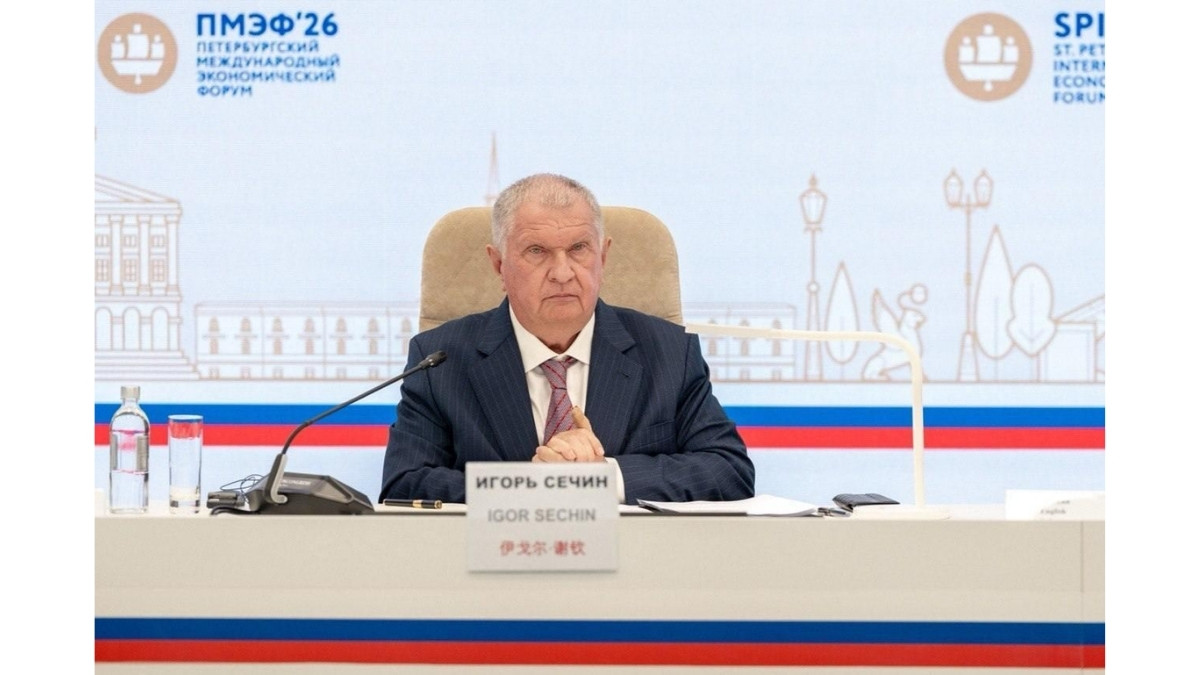
New Delhi [India], June 08: International institutions, including the United Nations, the World Trade Organization, the International Monetary Fund and the World Bank, have lost the ability to act as global regulators, Igor Sechin, CEO of Rosneft Oil Company and Executive Secretary of the Russian Presidential Commission on Strategic Development of the Fuel and Energy Sector and Environmental Safety, said at the Energy Panel of the 2026 St. Petersburg International Economic Forum.
The Rosneft chief’s report, titled“The Beginning of the End or the End of the Beginning: What Remains at the Bottom of Pandora’s Box?”, was devoted to the transformation of the world order, sanctions policy, the crisis of international institutions, and risks for the global economy and energy sector.
According to Sechin, the so-called “rules-based order” has in fact ceased to exist, while the global economy has become hostage to decisions made in the interests of technology, military, and financial corporations. As a result, many international institutions, such as the United Nations, the World Trade Organization, the International Monetary Fund and the World Bank, have lost the ability to perform their role as global regulators.
He paid particular attention to sanctions policy. According to Sechin, sanctions have become a tool of coercion and unfair competition. Over recent years, the volume of global trade subject to restrictions has increased sharply, and around 32,000 sanctions have been imposed on Russia over the past 12 years.
A significant part of his speech was devoted to the crisis in the Middle East. Sechin described developments around the Strait of Hormuz as a precursor to a global crisis. Not only oil and gas supplies pass through the strait, but also significant volumes of fertilizers, and disruptions in supply could trigger rising food prices.
Under these circumstances, the Northern Sea Route becomes especially important. According to Sechin, it is capable of providing global trade with the necessary transport solutions, shortening cargo delivery times and reducing transportation costs.
The head of Rosneft also noted the transformation of the global financial system. The volume of fictitious capital today exceeds $500 trillion, which is almost five times the size of global GDP. According to him, the growing use of the dollar as a sanctions instrument is encouraging the development of alternative payment systems, and Russia could have received more than $400 billion in additional revenue if it had increased the share of gold in its reserves earlier.
If you object to the content of this press release, please notify us at [email protected]. We will respond and rectify the situation within 24 hours.