

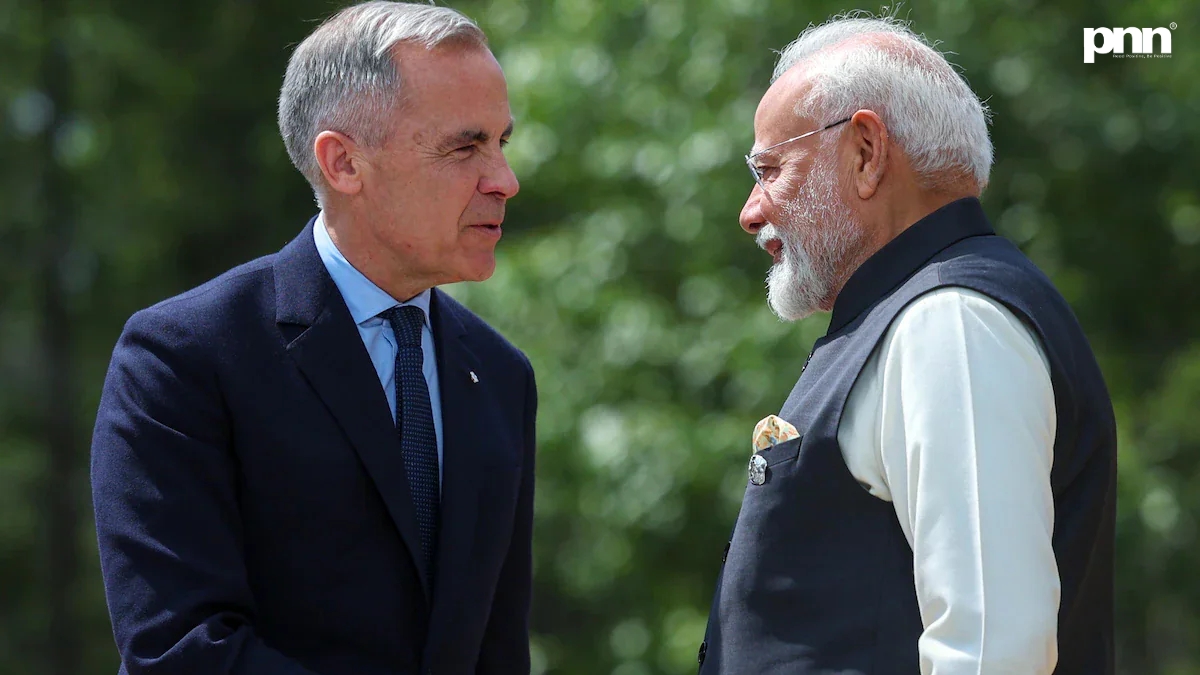
New Delhi [India], January 26: Mark Carney is preparing to land in India in early March. It is not ceremonial. It is strategic, urgent, and long overdue.
Canada’s prime minister is expected to visit India in the first week of March to sign a clutch of agreements spanning uranium, energy, critical minerals, artificial intelligence, and emerging technology. The timeline was confirmed by India’s High Commissioner to Canada, Dinesh Patnaik, in an interview this weekend.
This visit sits inside a much larger recalibration. Canada is actively reducing its dependence on the United States. India is the clearest alternative partner on the table.
Mark Carney has been explicit about the shift. At Davos last week, he said the old rules-based global order is no longer functioning. The line landed. He received a standing ovation.
Behind the rhetoric sits action. Canada has already reached an agreement with China to reduce tariffs on electric vehicles and canola, unlocking access to roughly C$7 billion in export markets. The stated goal is blunt: double non-U.S. exports over the next decade.
India fits cleanly into that math. Large economy. Fast growth. Expanding energy demand. Rising appetite for minerals and technology inputs Canada already produces.
This is not diversification for optics. It is risk management.
Formal negotiations for a Comprehensive Economic Partnership Agreement between India and Canada are expected to begin in March. Terms of reference should be finalised in February.
These talks were stalled for nearly two years. They are now being fast-tracked.
Patnaik said both sides are operating with a sense of urgency, driven partly by tariff uncertainty out of Washington and a broader loss of faith in predictable trade enforcement.
Within a year of negotiations beginning, a CEPA deal could be signed. That timeline would have sounded unrealistic twelve months ago. It no longer does.
India is not a symbolic hedge. It is central to Canada’s energy and resource strategy.
India’s demand for civilian nuclear energy is rising sharply. Its need for critical minerals is expanding alongside manufacturing and electrification. Its technology sector wants partners that are politically stable and resource-secure.
Canada checks those boxes.
During the visit, Carney is expected to sign smaller but consequential agreements covering nuclear energy, oil and gas, environmental cooperation, artificial intelligence, quantum computing, education, and culture.
One deal stands out. A 10-year uranium supply agreement valued at C$2.8 billion is likely to be included.
Canada’s Energy Minister Tim Hodgson, currently visiting India, did not confirm the uranium agreement but said Canada is open to selling uranium under the existing nuclear cooperation framework, provided India adheres to International Energy Agency safeguards.
India’s nuclear expansion plans are no secret. Canada’s willingness to fuel them is equally clear.
Beyond uranium, energy and mining agreements are expected to dominate announcements in the coming weeks.
Patnaik said pacts on critical minerals, crude oil, and LNG transactions will be the most prominent outcomes.
Hodgson was direct. India is a growing user of critical minerals. Canada can supply them. That alignment does not require narrative dressing.
This is extraction meeting demand. The rest is paperwork.
Carney’s visit also marks a reset after a deeply strained period in India-Canada relations.
His predecessor, Justin Trudeau, accused the Indian government in 2023 of involvement in the killing of Sikh separatist leader Hardeep Singh Nijjar. India denied the allegations. Diplomatic trust cratered.
Carney has moved quickly to stabilise the relationship. Prime Minister Narendra Modi attended the G7 summit last year on Carney’s invitation. Several Canadian ministers have since travelled to India.
Patnaik confirmed that a Canadian court case against four accused individuals is ongoing. If evidence emerges implicating Indians, India will take action, he said. No hypotheticals. No qualifiers.
India’s National Security Advisor is also expected in Ottawa next month for routine intelligence and security discussions.
None of this happens in a vacuum.
U.S. President Donald Trump threatened 100 percent tariffs on Canada over the weekend if Ottawa signed a deal with China. Carney responded by pointing to Canada’s obligations under the United States-Mexico-Canada Agreement, which restrict free trade deals with non-market economies.
India is not China. The distinction matters. Legally and politically.
Still, the pressure is real. Which explains the speed.
This is not a feel-good bilateral tour. It is transactional and deliberate.
Carney is stitching together a coalition of middle powers that can absorb shocks from an increasingly erratic global trade environment. India is the largest, most resilient node in that network.
From New Delhi’s perspective, Canada offers energy security, minerals, technology cooperation, and a counterweight to over-concentration elsewhere.
Both sides know what they need. Neither has time for delay.