



Mumbai (Maharashtra) [India], January 3: For years, cybersecurity has lived on caffeine, patch notes, and the quiet heroics of people who notice problems before anyone else does. It was human vigilance wrapped in dashboards, alarms, and late-night alerts. Then AI showed up—not as a sidekick, but as a colleague who never sleeps, never blinks, and occasionally scares everyone in the room.
As security leaders look toward 2026, the conversation has shifted from whether AI belongs in cybersecurity to how deeply it should be embedded. This isn’t about auto-generating reports or flagging suspicious logins anymore. This is about AI reasoning through threats, predicting attack paths, and responding faster than any human team could reasonably manage.
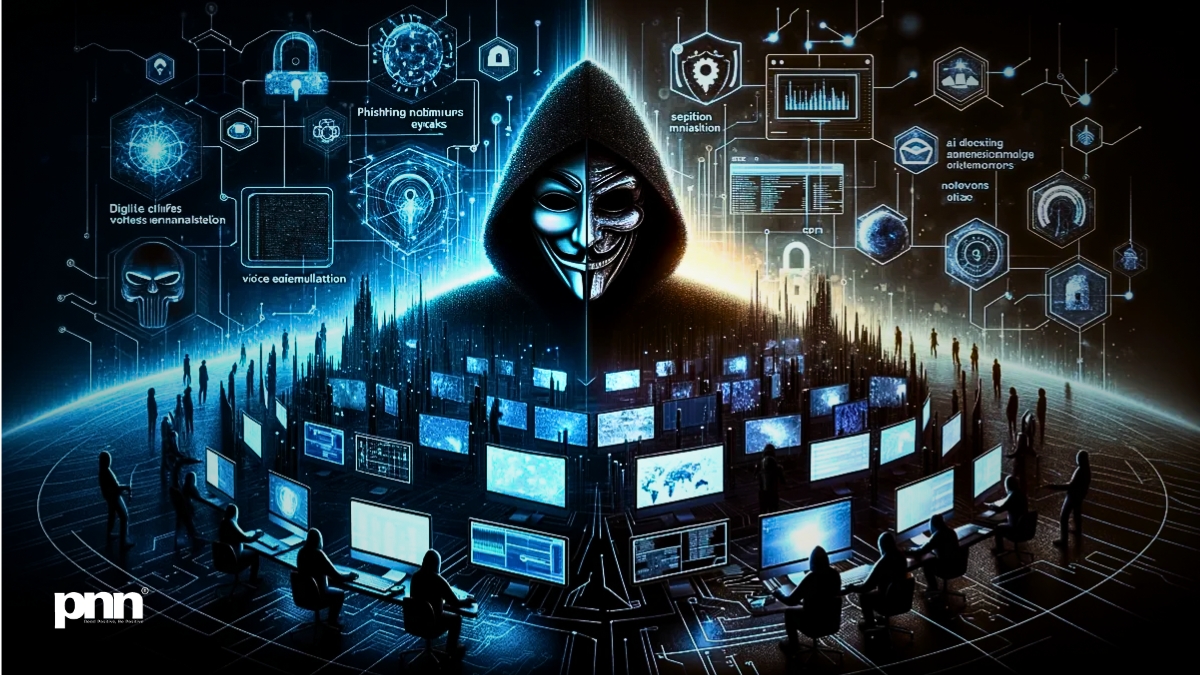
And yet, lurking beneath the optimism is an uncomfortable truth: the same intelligence making defenses sharper is also making attacks smarter.
Welcome to cybersecurity’s most intimate arms race.
When Security Stopped Being Reactive
Cybersecurity used to be forensic. Something broke, data leaked, alarms rang, and teams rushed to contain damage already done. The best-case scenario was catching an intrusion early enough to limit embarrassment.
AI disrupts that timeline entirely.
Modern AI-driven systems can:
-
Detect vulnerabilities within minutes of exposure
-
Correlate anomalies across networks in real time
-
Predict likely attack vectors before they’re exploited
In practical terms, this has reduced vulnerability detection from days or weeks to minutes. For large enterprises, that’s not a marginal improvement—it’s the difference between a near-miss and a front-page scandal.
Security, for the first time, is becoming anticipatory rather than apologetic.
The New Role Of The Security Chief: Part Technologist, Part Philosopher
This shift isn’t just technical—it’s cultural.
Security leaders are no longer just custodians of firewalls. They’re now responsible for deciding how much autonomy AI should have, when humans should override it, and who carries accountability when decisions are made at machine speed.
That’s not a job description. That’s a moral contract.
Because once AI systems are empowered to isolate systems, block access, or counter threats autonomously, the margin for error becomes political, legal, and reputational—not just operational.
The question isn’t “Can AI stop attacks?”
It’s “Who answers when AI stops the wrong thing?”
Attackers Aren’t Watching—They’re Learning
Here’s where the narrative stops being comforting.
Adversaries aren’t intimidated by AI-driven defense. They’re inspired by it.
Attackers are now using AI to:
-
Generate adaptive malware that changes behaviour mid-attack
-
Automate phishing at scale with personalised precision
-
Probe systems continuously until weak patterns emerge
In short, attackers are no longer writing scripts. They’re training systems.
This means cybersecurity is no longer about outworking adversaries—it’s about outthinking systems designed to think back.
And that’s a far more exhausting competition.
Automation Is Efficient—Until It Isn’t
There’s no denying the upside.
AI dramatically reduces manual workload. It filters noise. It prioritises threats. It allows security teams to focus on strategy instead of survival.
But automation has a personality flaw: confidence.
AI systems don’t doubt themselves. They execute decisions based on probabilities, patterns, and past data. That’s powerful—until the threat doesn’t resemble the past.
False positives can:
-
Lock out legitimate users
-
Interrupt critical business processes
-
Create trust fatigue among teams
And false negatives? Those are the nightmares that don’t announce themselves until it’s too late.
Efficiency, without humility, becomes fragile.
Why This Isn’t A Tech Story—It’s A Human One
The deeper AI goes into cybersecurity, the more it exposes a fundamental truth: security has always been about human behaviour.
AI can identify threats. It can respond instantly. But it cannot understand context the way people do—at least not yet.
It doesn’t grasp:
-
Organisational politics
-
Cultural nuances
-
Business trade-offs
-
Ethical boundaries
Which means human oversight isn’t optional. It’s essential.
The irony is that as systems become more intelligent, the cost of human disengagement becomes higher, not lower.
The Money Is Already Moving
AI-driven cybersecurity is no longer experimental spending. It’s becoming core infrastructure.
Enterprises are allocating significant budgets to:
-
AI-powered threat detection platforms
-
Behavioural analytics systems
-
Automated incident response tools
The market has crossed the “nice-to-have” threshold. For large organisations, not adopting AI in security is beginning to look negligent.
But this investment comes with dependency. Once systems are deeply embedded, switching becomes difficult. Vendors become strategic partners. Failures become shared liabilities.
And that changes how security decisions are made.
The Uncomfortable Question Nobody Likes Asking
If AI handles detection, response, and prioritisation—what happens to human expertise?
There’s a quiet fear in security circles: over-reliance.
Junior analysts may never develop intuition if AI does the thinking. Senior experts may find themselves managing tools rather than threats. Skills risk atrophy.
The danger isn’t job loss. It’s skill erosion.
And in a crisis where AI fails—or is manipulated—human judgment will be the last line of defence. That judgment has to be trained, not nostalgic.
The Balance Everyone Is Chasing
The future of cybersecurity isn’t man versus machine. It’s orchestration.
The most effective security environments emerging today follow a clear philosophy:
-
AI handles speed and scale
-
Humans handle judgment and consequence
It’s not glamorous. It doesn’t fit neatly into marketing decks. But it works.
Because security isn’t about being unbeatable. It’s about being resilient.
Final Thought: Intelligence Cuts Both Ways
AI in cybersecurity isn’t salvation. It’s amplification.
It amplifies capability, risk, efficiency, and consequence simultaneously. The same systems that protect us can be studied, mimicked, and eventually challenged.
That doesn’t mean we slow down. It means we grow up.
Because in a world where intelligence is automated, trust becomes the most valuable security asset of all.
And trust, unlike software, can’t be patched overnight.