



New Delhi [India], December 30: The Indian government has set an ambitious target: to ensure that 30% of new vehicle sales are electric by 2030. This goal is part of a larger effort to address environmental concerns, reduce carbon emissions, and promote sustainable transportation solutions. With increasing support from the government and private industry, the electric vehicle (EV) sector in India is gaining momentum. However, whether it will meet this ambitious target remains to be seen.
The Current State of the EV Market
India’s electric mobility sector has experienced significant growth in recent years. The country is now one of the fastest-growing EV markets globally. Projections indicate that the sector will grow at a compounded annual growth rate (CAGR) of 49% from 2021 to 2030. By 2030, India is expected to witness 17 million electric vehicles sold annually, a substantial increase from the current market size.
As of November 2024, over 1.3 million electric vehicles have been registered, signaling growing consumer interest in EVs. This growth can largely be attributed to strong government initiatives and a shift towards sustainable transportation options.
Government Policies Driving Growth
The Indian government has launched several initiatives to accelerate EV adoption. The second phase of the Faster Adoption and Manufacturing of Hybrid and Electric Vehicles (FAME) program, introduced in 2019, aims to electrify public and shared transportation by providing subsidies. The program focuses on 7,262 e-buses, 1.6 lakh e-three-wheelers, and 1.5 million e-two-wheelers, among others.
In addition to FAME, the National Programme on Advanced Chemistry Cell (ACC) Battery Storage initiative is designed to boost domestic manufacturing of batteries, a key component for EVs. This has led to a 40% surge in the number of registered EVs in 2023 compared to 2022.
In 2024, the government approved a $500 million EV policy to attract global manufacturers, positioning India as a hub for EV production. These policies, combined with incentives such as the Production Linked Incentive (PLI) scheme, are helping to stimulate both supply and demand for electric vehicles.
Key Challenges
Despite these efforts, several challenges remain. The charging infrastructure is still underdeveloped, with over 25,000 public charging stations operational, but the need for more widespread coverage remains critical for mass adoption. Furthermore, the cost of EVs remains a barrier for many consumers, as they are generally more expensive than traditional vehicles, even with government subsidies.
Conclusion
India’s electric mobility sector is on an upward trajectory, driven by strong government support, policy incentives, and growing consumer interest. However, to achieve the target of 30% EV adoption by 2030, India must address the challenges of infrastructure, affordability, and supply chain bottlenecks. With continued investment, innovation, and policy support, the ambitious goal is within reach, making India’s electric future increasingly likely.
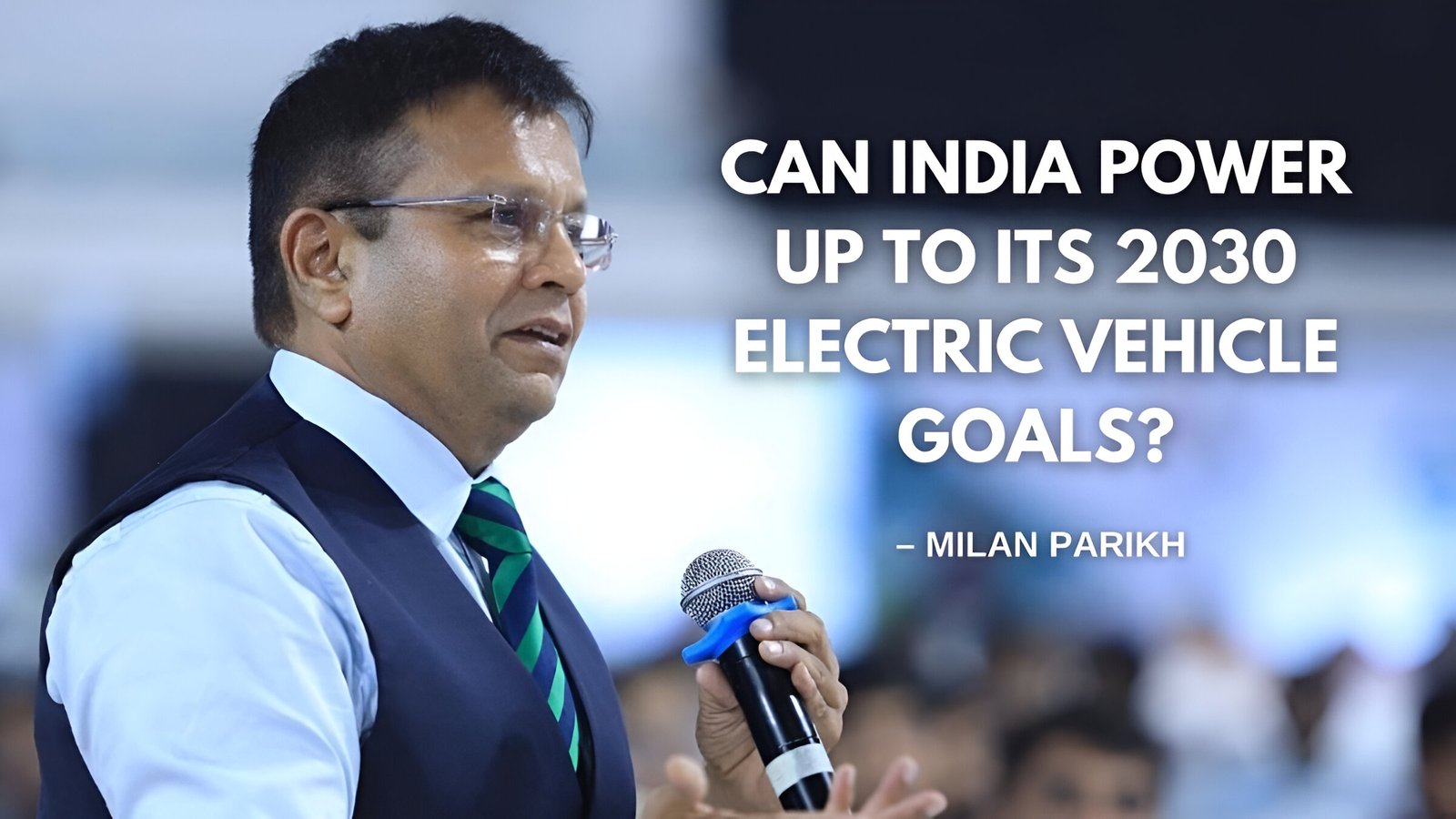
Article Written by Milan Parikh, Co Founder, Jainam Broking Limited
For More Detail or Feedback Please Contact or Visit: www.jainam.in
If you have any objection to this press release content, kindly contact [email protected] to notify us. We will respond and rectify the situation in the next 24 hours.