





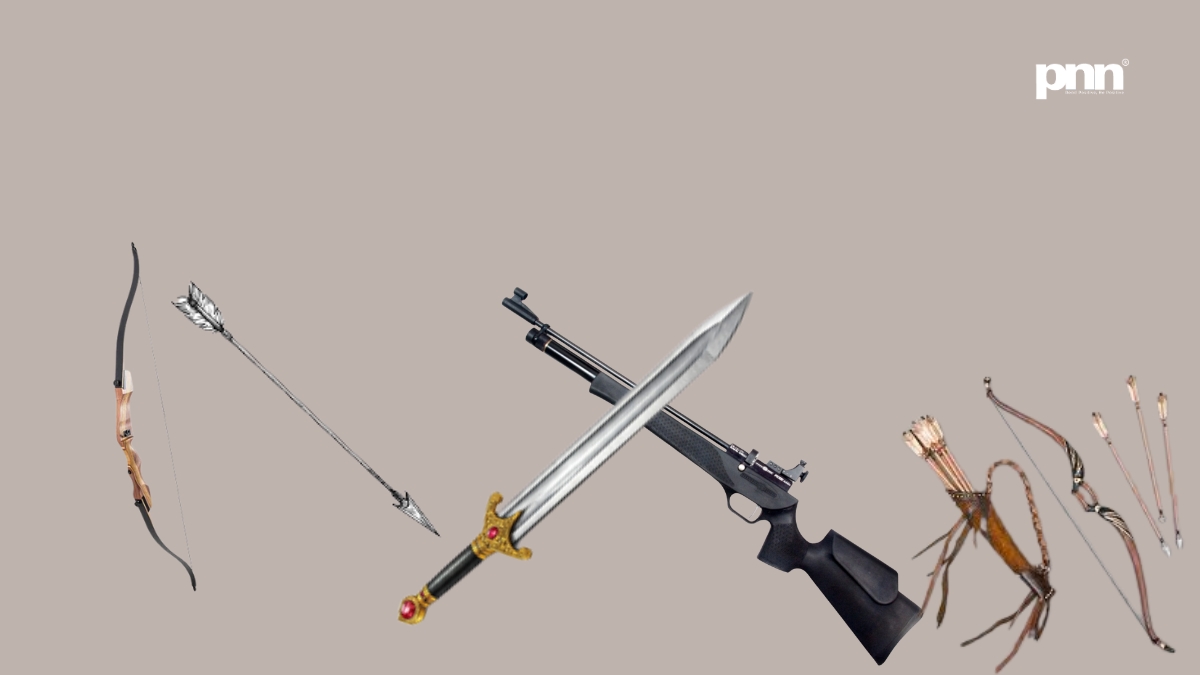
In ordinary, civilian life, society has made a fairly clear judgment without ever holding a formal meeting about it. Guns are treated as dangerous, uncomfortable, and in need of constant control. Bows, arrows, and swords, meanwhile, live comfortably in museums, sports, hobbies, stories, and backyard conversations about “cool historical stuff.” This isn’t because people are inconsistent. It’s because these tools interact very differently with normal life.
Bows and swords existed alongside daily routines. People farmed, traded, raised families, and argued with their neighbors while these weapons were present. Most of the time, nothing happened. That mattered. Their presence didn’t turn everyday frustration into immediate disaster. You could have a bad day and still go home without anyone dying.
Using a bow takes time and focus. You don’t casually fire one while emotional, distracted, or careless. A sword is even less casual. It’s heavy, visible, and impractical. You don’t bring one into a disagreement unless you are making a very deliberate, very obvious choice. These weapons don’t blend into normal life. They interrupt it.
That interruption acts like a safeguard.
Guns do the opposite. They fit seamlessly into modern routines. They’re compact, fast, and immediately effective. The distance between feeling something and acting on it can be almost nonexistent. That’s why society treats them with anxiety. It’s not fear of the object—it’s fear of how easily ordinary moments can turn irreversible.
Think about how we actually behave today. People get tired, angry, impulsive, distracted, depressed, and overwhelmed. That’s not a moral failure; it’s normal. Tools that tolerate human imperfection tend to coexist better with society. Tools that assume perfect judgment do not.
This is why bows and swords feel “cool.” They are demanding. They don’t reward impulse. They require preparation, space, and intention. Their risks are visible and slow enough for second thoughts to exist. They give life a chance to de-escalate.
It’s also why we comfortably turn these weapons into sports and hobbies. Archery ranges, fencing clubs, reenactments—these exist because the danger is manageable. You can participate without turning every mistake into a tragedy. Society trusts these tools because they don’t overpower everyday life.
Guns never earned that trust in the same way. Even in peaceful settings, they change the atmosphere. A normal argument, a bad mental health day, or a moment of carelessness becomes something far more serious simply because a gun is involved. That’s not drama; it’s pattern recognition.
People weren’t better in the past. They were just as human as we are now. The difference is that their everyday tools didn’t let human weakness escalate instantly. Bows and swords stayed on the edge of daily life. Guns sit uncomfortably inside it.
So when society quietly agrees that guns are bad but bows and swords are cool, it isn’t confused. It’s practical. One fits ordinary human behaviour. The other expects humans to behave perfectly.
And society has never worked that way.