


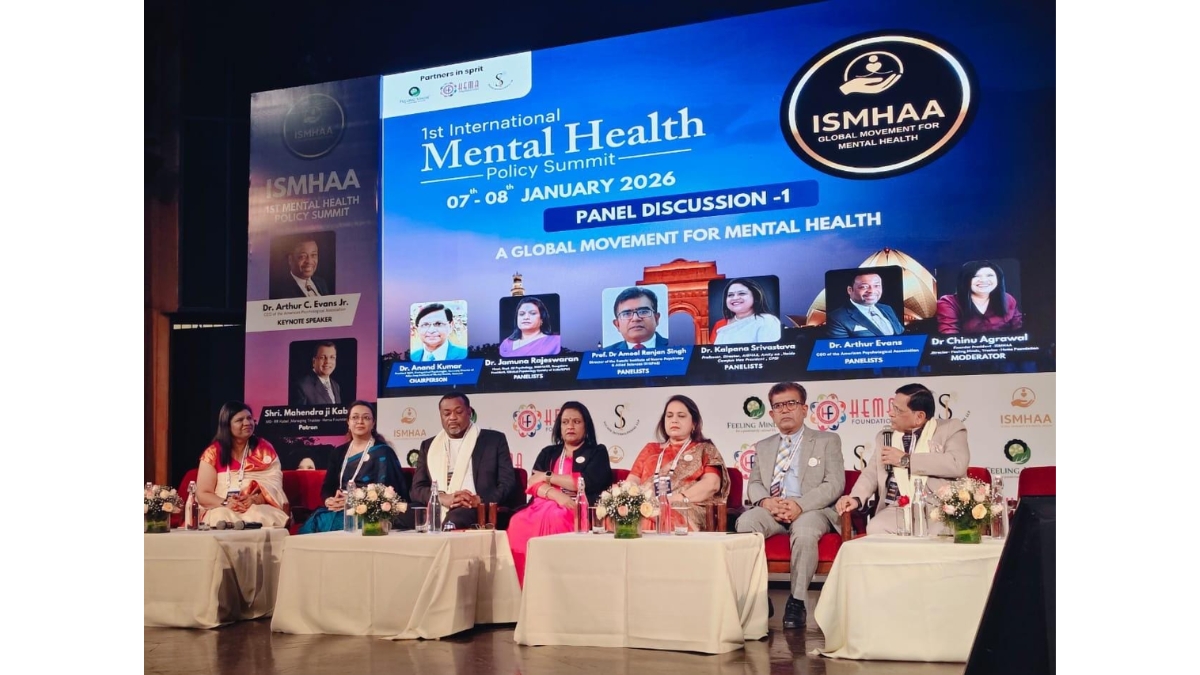
New Delhi [India], January 9: The International Mental Health Policy Summit of the International Society for Mental Health Advocacy and Action (ISMHAA) commenced with a powerful call for collective responsibility, cultural rootedness, and systemic reform, signalling what many speakers described as the beginning of a sustained national movement rather than a standalone event.
A Welcome that Set the Moral Compass
The Summit formally opened with a deeply reflective Welcome Address by Dr Mahendra Kabra, RR Kabel, Founder Trustee Hema Foundation and chief patron of ISMHAA underscored that India stands at a critical inflection point in its mental health journey. Emphasising that mental health must be approached as a shared societal responsibility, he noted that the Summit represented a collective commitment to action, ethics, and long-term capacity building. Dr Kabra placed on record his appreciation for the dedication of mental health professionals working across disciplines and geographies, urging sustained collaboration between policy, practice, and community.
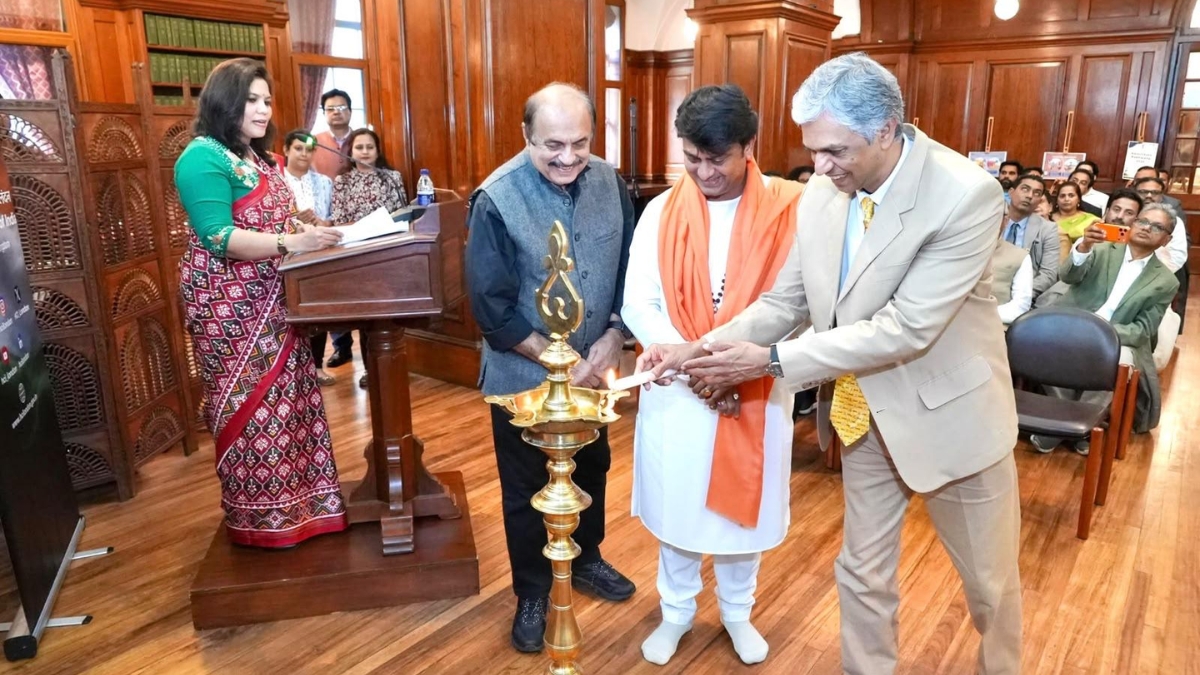
The ceremonial lighting of the lamp, accompanied by a Ganesh Vandana, symbolised wisdom, new beginnings, and the ethical grounding required for the work ahead. Followed by the Preludians (Students from The Prelude School Agra) gave a delightful insight into the understanding, challenges faced by the current adolescent generation.
Keynote Addresses: Re-imagining Mental Health for a Changing World
The Keynote Address by Dr Arthur C. Evans, CEO American Psychologist Association, delivered under the resonant theme “Hope is Healing”, set the intellectual and emotional tone for the Summit. Dr Evans called for a decisive shift from reactive, illness-centric models to holistic, preventive, and community-integrated systems of care. He emphasised the role of families, natural support systems, and cross-sector partnerships, asserting that mental health must be woven into everyday life rather than confined to clinical spaces. His address concluded with a compelling call to move from the absence of illness to the presence of wellbeing.
The second Invited guest Address by Dr Ann Vernon, focused on Social–Emotional Learning (SEL) as a foundational pillar of education policy. Drawing on international evidence, she demonstrated how SEL improves academic outcomes, emotional regulation, relationships, and long-term mental health, advocating its integration as a core, preventive curriculum from early schooling through adolescence.
In the third Invited guest Address by Dr Rainer Kurz introduced the “Great 8 Success Factors” framework, placing reasoning at the heart of human functioning. He articulated eight core capacities—ranging from investigating and creating to coping and supporting—as essential to resilience, adaptability, and sustained mental wellbeing in an increasingly complex world.
The fourth Invited guest Address by Dr Amool Ranjan Singh reinforced the urgency of promotion and prevention, particularly within schools. Stressing the primacy of parents and teachers in shaping children’s emotional resilience, he cautioned against over-reliance on technology and advocated a return to play, sports, culture, and human connection as protective factors for mental health.
Concluding Address by Dr. Jamuna Rajeswaran, NEP phasing out of M.Phil Clinical Psychology threatens training depth, workforce quality, and clinical capacity. Highlighted critical gaps: fragmented regulation, disrupted training, unregulated practice, weak research linkage, and severe manpower shortage. Strongly recommended a central, independent regulatory body to standardize training, licensing, ethics, and supervision, and to build national clinical capacity.
Presidential Address: From Awareness to Accountability
In a decisive Presidential Address, Dr Chinu Agrawal, Founder President, ISMHAA, articulated the ethical and regulatory imperatives confronting India’s mental health ecosystem. Calling for a shift from awareness to accountability, she emphasised the urgent need for strong governance, ethical practice, and public protection. Addressing the growing influence of artificial intelligence and digital platforms, she cautioned that technology must be governed by human judgement rather than allowed to dictate care, warning against pseudoscience and misrepresentation in the mental health space.
Chief Guest’s Reflections: A Civilisational Perspective
The Chief Guest, Shri Manoj Joshi, described ISMHAA as a movement rooted in India’s civilisational wisdom. He reminded the gathering that mental health knowledge existed in Indian traditions long before modern psychology and warned that contemporary society risks becoming increasingly self-centred and disconnected. His address reinforced the Summit’s central message: mental health must remain about people, for people.
Panels, Lived Experience, and Collective Dialogue
The Summit featured a rich array of panel discussions, including “The Practice of Psychology: One-to-One to One-to-Many”, which explored scaling mental health impact through community engagement and preventive education, and “Gen Z Mental Health: Gaps, Pressures and Pathways”, which examined systemic stressors and proactive solutions for younger populations.
A deeply moving session titled “Heart Talks”, moderated by Dr Chinu Agrawal, foregrounded lived experience as a vital source of learning, calling for a culture of compassion, appreciation, and self-worth beyond achievement.
Research, Capacity Building, and Policy Action
The Summit also hosted multiple tracks of oral research presentations, round-table conferences, and a Continuing Rehabilitation Education (CRE) workshop focused on adolescent mental health. A major highlight of the Valedictory Ceremony was the presentation of a White Paper to be submitted to the Parliamentary body of the Government of India, reinforcing the Summit’s commitment to translating dialogue into policy action.
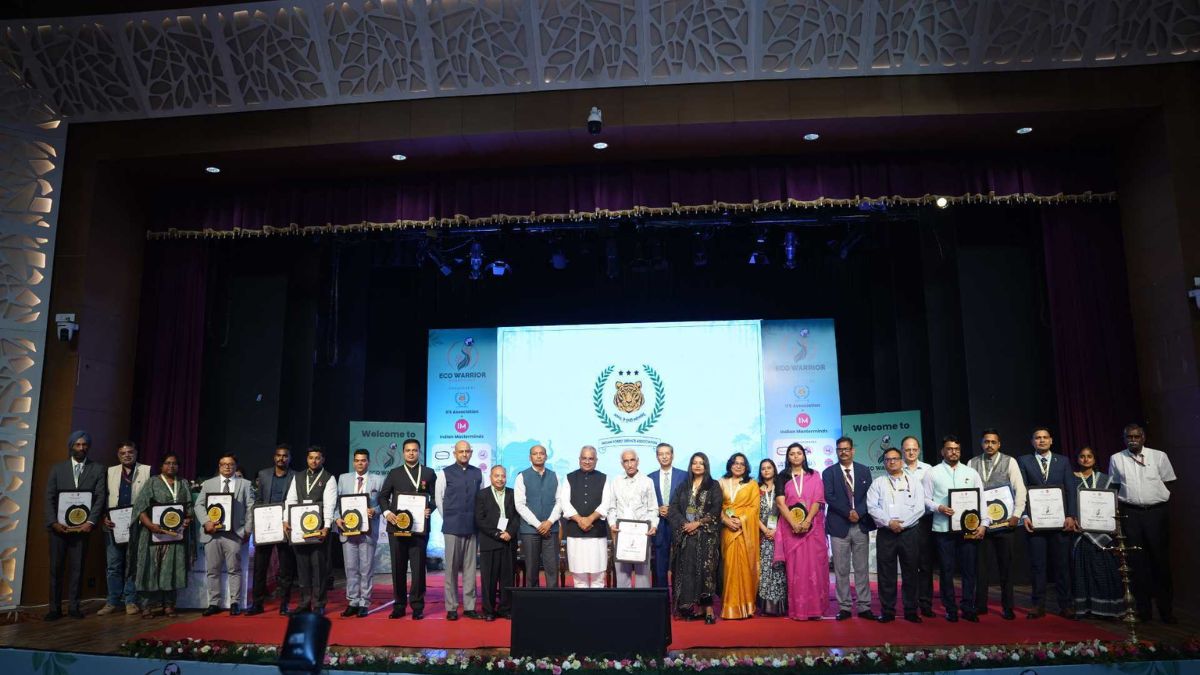
The event concluded with awards recognising exemplary contributions to mental health advocacy and practice, followed by a closing address reaffirming hope, collaboration, and sustained action.
A Collective Commitment
As the Summit drew to a close, one message resonated unequivocally: India’s mental health future depends not on isolated initiatives, but on ethical leadership, cultural grounding, interdisciplinary collaboration, and sustained accountability. ISMHAA’s National Summit has laid the foundation for this journey—one rooted in hope, responsibility, and collective resolve.
If you object to the content of this press release, please notify us at [email protected]. We will respond and rectify the situation within 24 hours.