

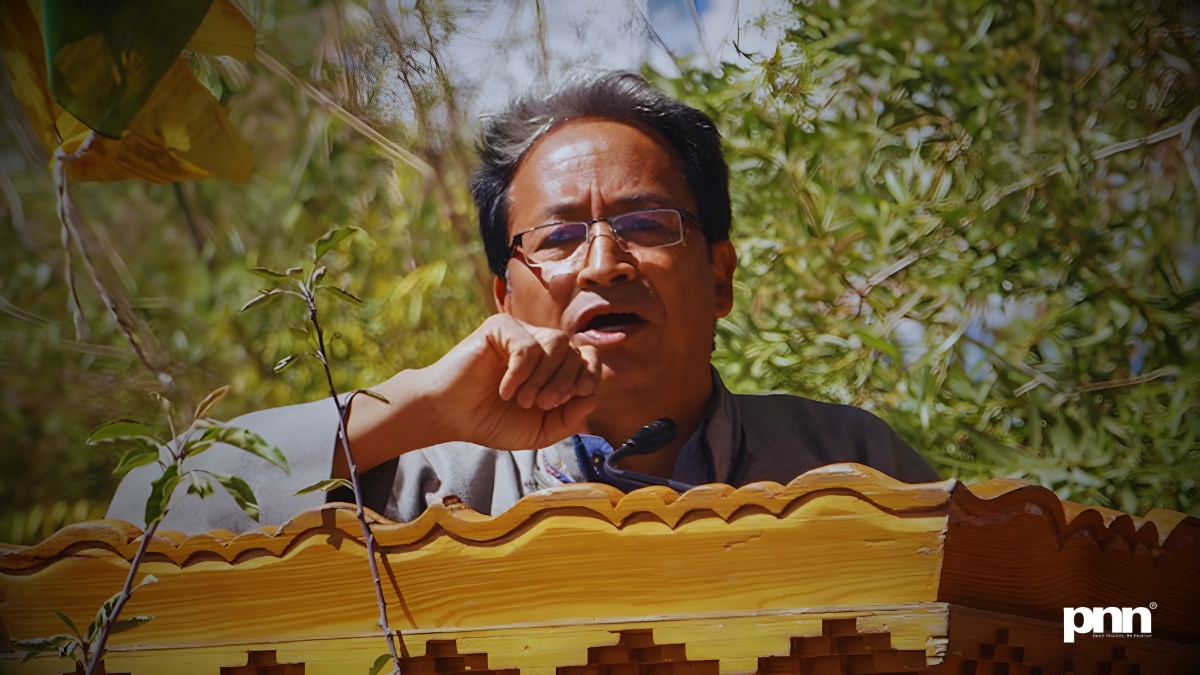
Leh (Ladakh) [India], October 7: Instead of glaciers, Sonam Wangchuk, an engineer, inventor, educator, and climate activist, is making headlines for defying authority.
Sonam Wangchuk Arrest – The Detention That Shook the Himalayas
On September 26, 2024, Ladakh police hauled 59-year-old Sonam Wangchuk out of his home. His crime? Advocating for democratic rights in Ladakh. His punishment?
Detention under the National Security Act (NSA) which allows preventive imprisonment for up to a year without trial. He was shipped over 1,600 kilometres to Jodhpur Central Jail in Rajasthan.
Authorities accused him of inciting violence and provoking revolt. Translation: he spoke loudly enough to make the establishment uncomfortable, peacefully. His wife, Gitanjali J. Angmo, didn’t flinch. She filed a habeas corpus petition in the Supreme Court demanding to know where her husband was and why. Calm, measured, and defiant, she told reporters, “We will fight this on its merits.”
If you’ve ever built ice stupas to save water, you know resolve when you see it.
From Engineer to Instigator
Wangchuk is not your garden-variety activist. In 1988, fresh from college, he co-founded SECMOL, a school for students rejected by conventional education. Instead of forcing rote memorisation, he taught thinking. Critical, independent, disruptive thinking.
His solar energy projects, climate-responsive architecture, and sustainable housing experiments earned international attention. In 2018, he received the Ramon Magsaysay Award.
Bollywood noticed too. Aamir Khan’s Phunsukh Wangdu in 3 Idiots? That was Wangchuk, distilled into a cinematic hero. Fame, awards, and admiration didn’t make him tame. Heroes have a nasty habit of making the establishment nervous.
From Ladakh’s Hope to Delhi’s Headache

Wangchuk rejoiced in 2019 when Article 370 was repealed. Many Ladakhis did the same. Autonomy and recognition seemed like positive developments. Five years later, Ladakh remains a Union Territory with no legislature.
Tribal communities, the majority of the population, demanded statehood and protection under the Sixth Schedule, which ensures self-governance.
Wangchuk became their voice. Reluctantly, perhaps, but inevitably. As he once said, “Politics may not interest you, but politics will eventually find you.” He wasn’t wrong.
The Spark That Ignited Detention
In September 2024, Wangchuk and civil society groups, including the Apex Body Leh and Kargil Democratic Alliance, began a hunger strike demanding Sixth Schedule protections. On day fifteen of a thirty-five-day fast, a youth protest turned violent, the BJP’s Leh office was torched, security forces fired, and four people died.
Authorities pinned the blame on Wangchuk, though he wasn’t physically present. Within 48 hours, he was detained by the NSA. Allies were rounded up. Land leases and foreign funding for SECMOL and the Himalayan Institute of Alternatives (HIAL) were cancelled. Message delivered: dissent, even with a conscience, carries a price.
A Wife’s Courtroom War
Gitanjali Angmo moved to the Supreme Court on October 2. Represented by Kapil Sibal, she argued the government violated procedure by not disclosing detention grounds. Solicitor General Tushar Mehta dismissed concerns, urging the court not to “create hype.”
The Supreme Court didn’t release Wangchuk immediately but ensured his medical care. Next hearing: October 14. Meanwhile, Angmo’s legal battle continues, challenging the idea that her husband is anti-national.
The Irony of Patriotism
For decades, Wangchuk was India’s ecological poster boy. Solar tents for soldiers, ice stupas to preserve water, sustainable housing in the Himalayas; he literally helped protect lives.
Now the same government that once sought his expertise brands him a national security threat. His wife summed it up bluntly: “They could not buy him, so they jailed him.”
Ecology Meets Politics
Climate change is causing Ladakh to melt quickly. Wangchuk cautioned that uncontrolled mining and solar projects could destroy delicate ecosystems. He rallied the populace, marched, and fasted in addition to issuing warnings. Hunger strikes masquerading as environmental demonstrations.
When ecology collides with politics and money, money usually wins. But Wangchuk? He’s the anomaly. And in Delhi’s eyes, anomalies are threats.
The Global Echo
The world is watching. Manshi Asher, Himalayan environmental justice researcher, notes Wangchuk operates at the intersection of sustainability and governance. In centralised, extractive economies, communities lose. Wangchuk fights for ecology and democracy simultaneously.
Delhi sees a dissenter. The world sees a line in the sand.
From Gandhi to Galwan
His activism borrows from Gandhian non-violence. Hunger strikes, marches, and peaceful protests have always been his method. From jail, he urged Ladakhis to maintain peace and unity.
Yet tragedy has struck: four protesters died, and Stanzin Dorje, a local businessman who joined the hunger strike, committed suicide under pressure. The question looms: can a democracy silence a man protecting his homeland’s environment?
The Fragile Frontier
Ladakh borders China and Pakistan. It’s a geopolitical powder keg. Local leaders warn that branding Ladakhi leaders anti-national could backfire. “You cannot govern a border region with an iron fist forever,” said Sajad Kargili, Kargil Democratic Alliance.
Yet Delhi doubles down. Every protest, every detention, every revoked license sends the same message: dissent will not be tolerated. History shows one thing, though: you can arrest a man, not a movement.
Sonam Wangchuk: Hero or Mirage?
Here’s the uncomfortable truth: Wangchuk might not be a flawless hero. He may bear some responsibility for the unrest. Geniuses often spark revolutions, and sometimes fires they cannot control. He has moved mountains, literally. Did his words move mobs, too? Possibly.
But one thing is clear: the world is defending Phunsukh Wangdu, the cinematic hero.
Wangchuk is human. And humans can falter. Every hero is one misstep away from being the villain. In Ladakh’s fragile landscape, the stakes could not be higher.