


Mumbai (Maharashtra) [India], August 31: The hardest problems in organizations are rarely the ones on the agenda. A company may say it needs to professionalize, when the deeper challenge is that authority is still concentrated in a few individuals. A leadership team may ask for alignment, when the real issue is a lack of trust. A culture initiative may be launched to keep pace with growth, when what’s actually required is a shift in how leaders think and behave. A merger may be framed as integration, when the harder task is building a new collective identity.
The visible problem is often only the entry point. Beneath it lie harder questions: How does power really work here? Which ways of working served the organization well earlier but have now become constraints? What does the organization need to become for its next chapter to be possible? As Sujata Deshmukh puts it, “We look at leadership conviction and behavior to gauge what the ethos is, not what the Vision/Values posters on the wall say.”
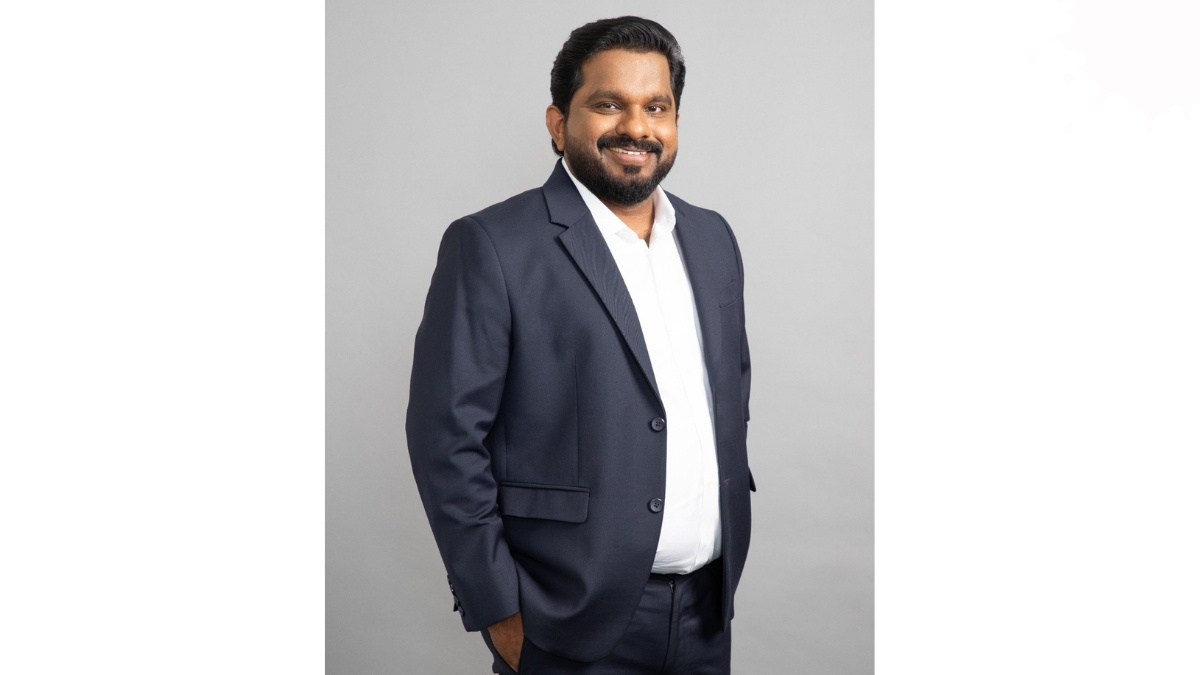
This is the territory the founder of Tutul Consulting has spent almost three decades learning to navigate.
Tutul is a boutique Organizational Development firm based out of Mumbai and Bengaluru, founded by Sujata Deshmukh after almost two decades in consulting. Over nearly three decades, she has worked with more than 500 organizations across 12 countries and virtually every major sector. Tutul itself is seven years old and has worked alongside more than 100 organizations. But the numbers tell only part of the story. What distinguishes the practice is the depth of its relationships, the complexity of the situations it’s invited into, and its willingness to stay with an organization long enough to understand what’s really happening.
The Organization Behind the Organization
Every organization has a formal architecture: strategy, structure, processes, roles, governance. Alongside it exists another organization, less visible and often more powerful – made of relationships, history, identity, informal power, leadership behaviour, assumptions and unwritten rules. It determines who can challenge whom, how decisions really get made, and what becomes accepted as “the way things are done.”
Tutul works in this space between the formal organization and the one people actually experience. The starting point isn’t a prescribed intervention but an attempt to understand the system itself: What’s happening beneath the surface? What’s keeping the organization from moving forward? What needs to change in the organization itself for the desired future to become possible?
At the heart of this philosophy is a simple idea: the consciousness of an organization cannot be higher than the consciousness of its leaders. If leadership behaviour doesn’t evolve, culture rarely does. If culture doesn’t evolve, transformation rarely does.
From Business to Organization to Institution
Much of Tutul’s work can be understood through the journey from business to organization to institution. Building a successful business is one achievement; building an organization capable of sustaining that success is another; building an institution that can endure beyond its current leaders and strategy is more profound still.
This matters most at moments of transition – a family business outgrowing founder-led ways of working, a fast-growing company where informal culture starts creating friction, or a post-merger organization discovering that combining structures doesn’t automatically create one organization.
Tutul’s work spans three interconnected dimensions: institution building (ambition, guiding principles, governance, capacity to evolve), culture building (behaviours and patterns that enable or constrain evolution), and leadership building (assessment, succession, coaching, helping leaders rise to the scale of the organization they’re asked to lead). These rarely operate independently – which is why Tutul calls its work Organizational Development rather than a collection of separate services. The organization is treated as a living system, where change in one part affects the others.
When the Obvious Answer Isn’t the Real Answer
Leaders rarely call Tutul because they have no answers. They call Tutul when they realize that the answers they have aren’t quite solving the problem. The strategy may be sound, the structure redesigned, the team aligned – and yet something remains stubbornly unchanged.
The obstacle may be trust rather than structure, power rather than process, identity rather than strategy. As Sujata Deshmukh describes it, “Our ability to plug into client realities and understand the narrative is top class. That allows us to do high context work.” It’s this that lets Tutul find where an intervention is most likely to create real movement – not a standard answer, but the real leverage particular to that organization.
What This Has Looked Like in Practice
Tutul has been entrusted with very different organizational moments: a family enterprise transitioning to professional leadership, where the new top team first had to build trust before it could operate as one; a large diversified organization needing culture to evolve alongside strategy amid rapid growth; a post-merger organization shifting from “playing not to lose” to “playing to win”; leaders stepping into bigger roles needing coaching to build confidence faster than experience alone allows; assessing and recommending hiring of the right person at CXO level, thus reducing Leadership Risk. Different assignments, same pattern: the visible challenge is only part of the story, and the deeper work is building the organization’s capacity to sustain change.
The Advantage of Time
A defining feature of Sujata’s practice is the longevity of her client relationships, some spanning decades. Time changes what a consultant can see – knowing an organization’s history, what’s been tried before, which changes have genuinely endured. It also changes trust: a long-term advisor can challenge a leadership team with greater credibility, moving the conversation from “What do we need to fix?” to “What’s the next level of possibility for this organization?” In that sense, the relationship itself becomes part of the intervention.
The Person Behind Tutul
Sujata Deshmukh’s work sits at the intersection of organizational development, leadership, culture and institution building – particularly in situations with no neat answer, where the visible problem isn’t the real one. Clients ranging from a $3 billion EPC major to leading Consumer businesses, to an AI Product Company, to a cutting edge life science organization to an award-winning NGO point to her expertise, contextual understanding, and ability to bring reluctant people along.
What the Name Stands For
Tutul was Sujata’s father’s name; the firm was founded on what would have been his 75th birthday. His principles – doing the right thing, seeking the elegant solution over the easy one, meeting commitments, and unconditional positive regard for people – shape the firm’s approach: candour without judgement, challenge without diminishing people, rigour without unnecessary complexity. As Sujata Deshmukh puts it, “Our unconditional positive regard for clients means we respect a 25,000 crore organization the same way we respect a 100 crore start-up.”
A Different Kind of Advisory Relationship
Tutul’s ambition isn’t just expertise or frameworks, but trusted judgement – the kind of relationship where a leadership team can think aloud and confront uncomfortable realities. The goal isn’t dependence on the advisor, but an organization more capable of navigating its own complexity.
Ultimately, Tutul is less interested in fixing organizations than helping them evolve. The deepest questions aren’t about which intervention to run, instead it’s about what an organization has become, what’s holding it back, and what it needs to become for its next chapter to be possible.
That is the work beneath the work – a journey of becoming, rarely measured in months, but in years and sometimes decades.