





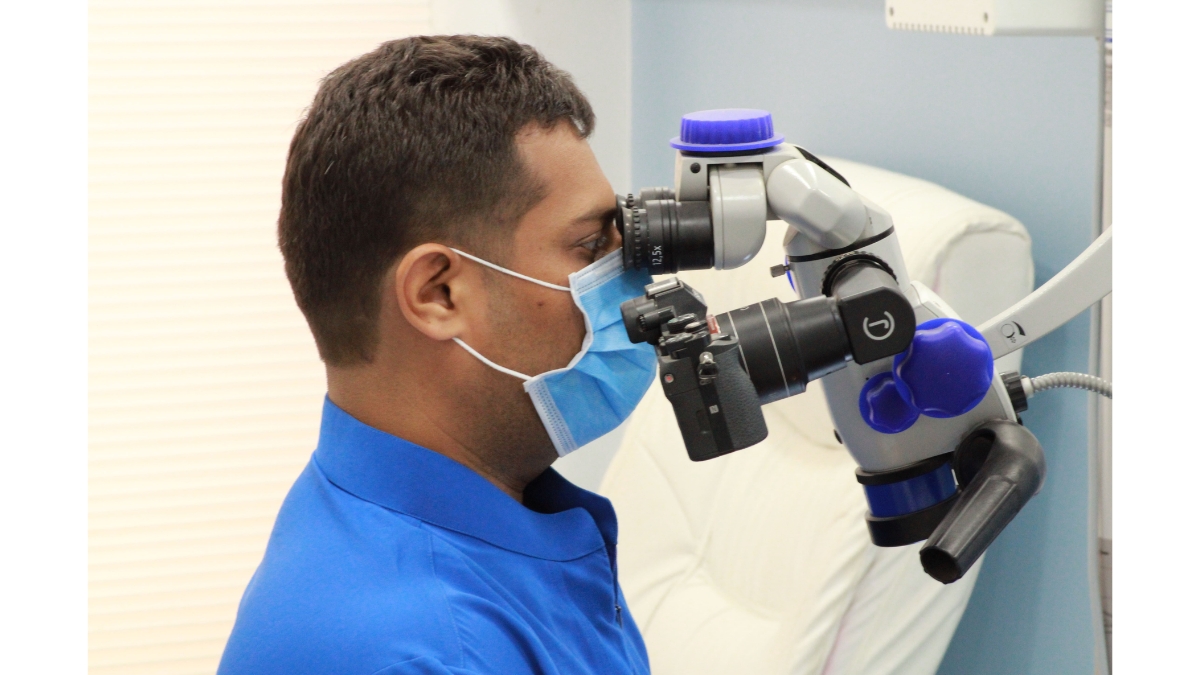
By Dr. Rahul Ved, (B.D.S , M.D.S , Micro Endodontist)
Mumbai (Maharashtra) [India], August 7: For decades, hearing the words “You need a root canal” has been enough to make many people anxious. Stories of painful procedures, multiple visits, or failed treatments have created a fear that still exists today. Yet, modern dentistry has changed dramatically. Today, one of the biggest advances in saving natural teeth is micro endodontics a technique that combines advanced technology with precision to make root canal treatment safer, more predictable, and more successful.
Unfortunately, many people are still unaware that not all root canal treatments are performed the same way.
Seeing the Difference
Imagine trying to repair the intricate machinery inside a wristwatch while wearing thick gloves and without enough light. Now imagine doing the same work under high magnification with bright illumination. The difference is obvious.
Root canals are often thinner than a strand of spaghetti, and many teeth contain hidden branches, extra canals, or tiny cracks that cannot be seen with the naked eye.
A dental operating microscope changes everything.
It magnifies the treatment area several times while providing intense illumination, allowing dentists to see details that would otherwise remain invisible. This precision helps in cleaning and sealing the tooth more effectively, reducing the chances of infection being left behind.
Simply put, what the dentist can see directly influences the quality of treatment.
As an endodontist, I strongly believe in one simple philosophy:
“If I see better, I do better.”
What Exactly Is Micro Endodontics?
Micro endodontics is a modern approach to root canal treatment performed under a dental operating microscope using specialized instruments and advanced techniques.
Unlike conventional root canal treatment, where visibility depends mainly on the dentist’s eyesight and overhead light, micro endodontics allows the clinician to work with exceptional precision.
This doesn’t just benefit the dentist – it benefits the patient through more accurate treatment and better long-term outcomes.
Why It Matters
A root canal is performed to remove infection from inside a tooth while preserving the tooth itself.
If even one canal is missed or inadequately cleaned, bacteria may survive and cause persistent pain or reinfection.
Research has shown that one of the common reasons for failed root canal treatment is missed canals – tiny pathways inside the tooth that remain untreated simply because they were not visible.
With microscope-assisted treatment, these hidden canals are far more likely to be detected.

Better Precision, Less Guesswork
Modern dentistry is moving away from experience alone and toward experience supported by technology.
A dental operating microscope helps dentists:
• Locate hidden canals
• Identify tiny fractures in teeth
• Remove infected tissue more precisely
• Preserve healthy tooth structure
• Perform minimally invasive treatment
• Improve long-term success rates
Instead of removing excessive tooth structure to “search” for canals, dentists can preserve more of the natural tooth.
This helps maintain the tooth’s strength for years to come.
When a Previous Root Canal Fails
Many people believe that once a root canal fails, the only solution is extraction followed by a dental implant.
This is one of the biggest misconceptions in dentistry.
In many cases, the tooth can still be saved through micro endodontic retreatment.
During retreatment, the old filling material is carefully removed, hidden canals are identified, the source of infection is eliminated, and the canals are cleaned and sealed again.
The microscope plays a critical role in this process because it allows the dentist to identify the exact reason why the previous treatment failed.
Saving Teeth Before Replacing Them
Dental implants are among the greatest advances in dentistry and have helped millions of patients worldwide.
However, an implant should replace a tooth only when that tooth truly cannot be saved.
A natural tooth has a periodontal ligament that provides sensation, shock absorption, and natural chewing mechanics—features that even the best implant cannot fully replica
Micro endodontics has greatly expanded our ability to do preserve the natural tooth.
Is Microscope-Assisted Root Canal More Painful?
Quite the opposite.
Patients are often surprised by how comfortable modern root canal treatment has become.
Advanced anesthesia, rotary instruments, improved irrigation systems, and precise microscope-guided techniques make the procedure smoother and more predictable than ever before.
Is Every Root Canal Done Under a Microscope?
No. Although microscopes have become the standard of care in many advanced endodontic practices across the world, they are still not used routinely in every dental clinic.
Many patients are unaware that they can ask whether their treatment will be performed using a dental operating microscope.
Questions Every Patient Should Ask
Before undergoing a root canal treatment, it is reasonable to ask your dentist:
- Will my treatment be performed under a dental operating microscope?• Will digital X-rays or advanced imaging be used?• Is there any possibility that the tooth has extra canals?• If this is a repeat root canal, why did the previous one fail?• Can my natural tooth still be saved?
These questions encourage meaningful discussions and help patients understand the treatment being recommended.
Dentistry Is Becoming More Precise
Just as surgeons today perform minimally invasive procedures using specialized cameras and magnification, dentistry is also embracing technologies that improve precision and patient outcomes.
The dental operating microscope represents one of the most important advances in modern endodontics.
It allows dentists to work with greater confidence while giving patients a better chance of preserving their natural teeth for many years.
The Takeaway
A root canal should not be viewed simply as a procedure to relieve pain—it is a treatment designed to save a tooth.
Micro endodontics has changed the way root canals are performed by replacing guesswork with precision.
For patients, this means better diagnosis, more predictable treatment, greater preservation of healthy tooth structure, and, most importantly, a higher likelihood of keeping their natural smile.
Because when it comes to saving teeth, sometimes the smallest details make the biggest difference.
If you object to the content of this press release, please notify us at [email protected]. We will respond and rectify the situation within 24 hours.