




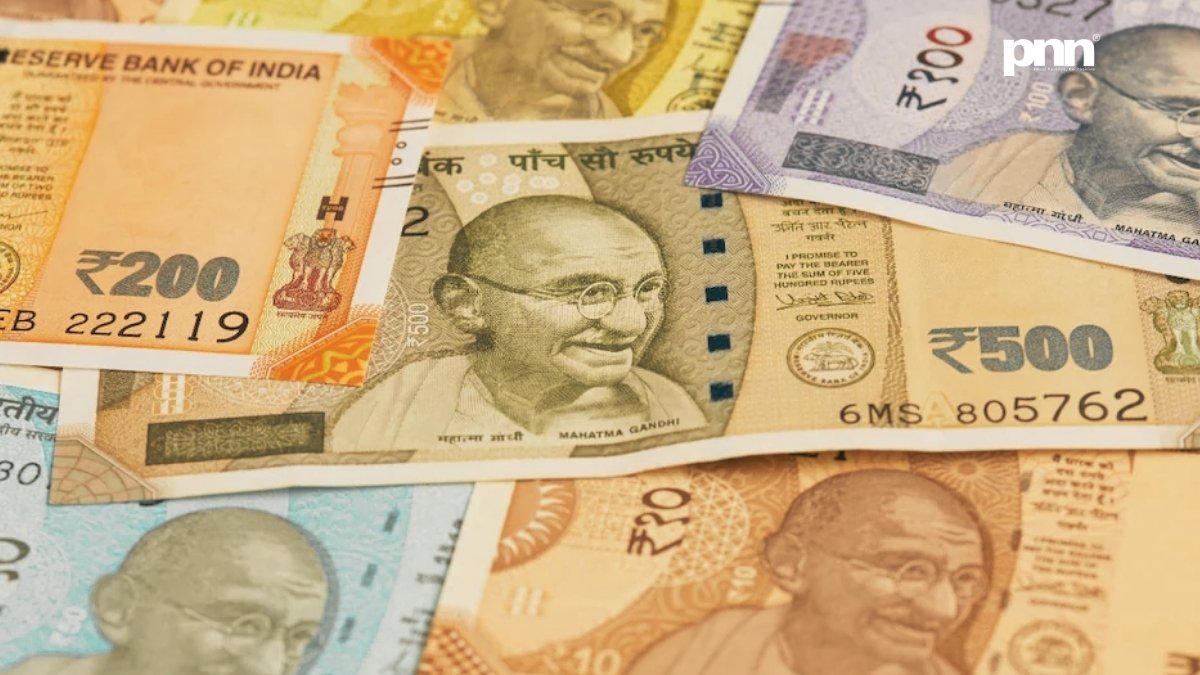
New Delhi: While the traditional cash-based payment system may not be the preferred option for most people in India these days, it remains an important part of the Indian economy. Despite the significant growth in UPI transactions, reaching 18.39 billion with a total value of ₹24.04 lakh crore in June 2026, according to the National Payments Corporation of India (NPCI), physical currency is still an essential component of economic activity for millions of Indians, especially those in the countryside, small businesses and the informal sector.
That’s a lot of money to handle all at once but it does cost. The Reserve Bank of India (RBI) announced in its latest Annual Report that the value of banknotes in circulation reached ₹38 lakh crore in FY2024-25, and the banknote printing presses roll billions of new notes each year. The notes circulated through ATMs, banks, the markets, and household become damaged, dirty, and costly to manage.
In this background, the RBI is getting ready to launch polymer (plastic) bank notes on a trial basis which may be one of the most significant developments in the Indian currency system since the launch of Mahatma Gandhi (New) Series.
The launch of the ₹10 notes has been scheduled to start with the pilot.
The RBI has been granted permission by the Government of India to make polymer banknotes a part of a field test in the denomination of ₹10 initially. The pilot will be conducted in identified areas throughout the country to test the notes to ensure they work in the diverse climatic conditions found in India, such as humid, heat, high circulation etc.
The central bank will consider public acceptance, machine compatibility and operational efficiency, in addition to durability, before making an assessment on whether to roll out polymer notes in a wider scale.
RBI is thinking about polymer notes, why?
Unlike Indian paper money which is printed on paper of cotton origin, polymer banknotes are printed on a material engineered for use as banknote paper. They are more costly to make up front, but they have a longer life.
The Reserve Bank of Australia (RBA) says that polymer notes are expected to serve 2.5 to 4 times longer than paper notes, which decreases the need for them to be replaced and the long-term cost of managing currency.
This could save India a lot of money over the life cycle of every bank note because the Indian currency is traded frequently on a daily basis. Besides, the longer the notes last, the fewer interruptions of currency supply, and the less impact on the environment from reprinting the currency frequently.
Improved safeguards against counterfeiting.Better protection against counterfeiting.
Another significant impetus behind the proposal is security.
With polymer banknotes, central banks can put in place more advanced security features, including transparent windows, holograms, colour shifting elements, micro-optic designs, and tactile features, which are much more difficult to counterfeit than paper banknotes.
According to RBI’s Annual Report, the banks have identified over 2.17 lakh counterfeit banknotes by denomination in FY2024-25. Fake notes form a very small fraction of the total currency in circulation but the prevention of counterfeiting is a major goal of India’s currency management policy.
Polymer substrates have also been identified by the Bank for International Settlements (BIS) as one of the most successful means of advancing the security of banknotes.
This model is already used throughout the world.
India would not be going off the beaten path.
In 1988, Australia was the first nation in the world to adopt polymer currency. Since then over 60 countries and jurisdictions have issued polymer banknotes, such as Canada, the United Kingdom, Singapore, New Zealand, Mexico, Romania, Vietnam and Nigeria.
New Bank of England notes are also polymer, which means they’re significantly more resistant to moisture and dirt and last at least 2.5 times longer than paper notes, the Bank said, adding that it also introduced polymer notes in 2016.
Some of the central banks have also indicated that their counterfeiting detection has decreased after the transition.
This is not the first time that India has tried this. The RBI has been thinking about polymer bank notes since 2014 and the project was still on the initial stage.
The central bank is being more prudent this time around. It will not declare a nationwide rollout, but will collect operational information from the pilot first to see if it’s an option for the long haul.
If the trial is successful, polymer notes would be slowly phased in on other denominations. Meanwhile, the present paper money will be valid as tender money.
