





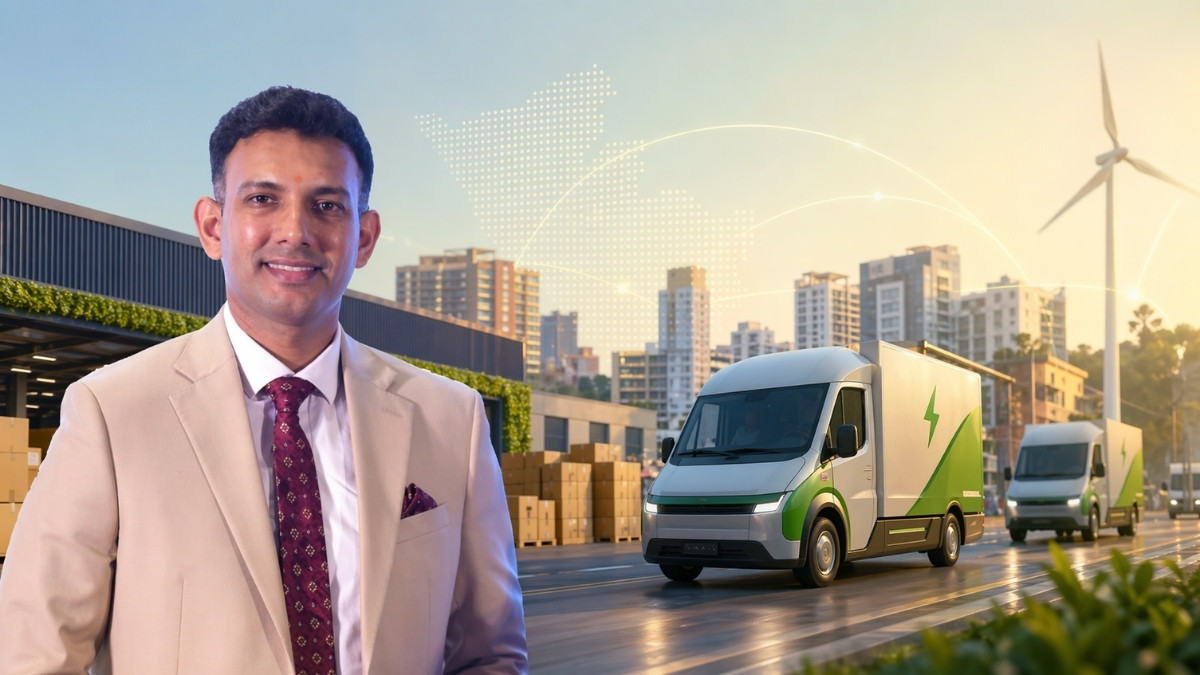
Hyderabad (Telangana) [India], April 22: India’s logistics landscape is undergoing a structural realignment, moving away from traditional metro hubs to Tier II and Tier III cities. These regions, once seen primarily as consumption centres, are now emerging as key drivers of both e-commerce demand and logistics activity. This transition is backed by rising disposable incomes, deeper digital adoption, and the rapid expansion of e-commerce platforms into non-metro markets.
According to JMK Research, EV penetration in these cities has already reached over 10% in Tier II and nearly 9% in Tier III markets, highlighting their growing role in the next phase of logistics growth.
“Regional markets are rapidly becoming central to supply chain strategy, with logistics players shifting from metro-centric models to distributed, region-first networks,” says Pushpank Kaushik, CEO & Head of Business Development (Subcontinent, Middle East, and Southeast Asia) at Jassper Shipping. “The convergence of e-commerce demand and EV-led last-mile delivery is enabling multimodal connectivity, improving turnaround times, and reducing costs. As a result, Tier II and III cities are evolving from peripheral markets into core nodes of logistics execution and network design.”
E-Commerce Expansion Reshaping Supply Chain Models
Non-metro regions are now driving a significant share of India’s e-commerce growth, signalling a structural, long-term shift in consumption patterns rather than a temporary surge. Increased internet penetration, affordable smartphones, and improved payment infrastructure have enabled consumers in Tier II and III cities to access a wider range of products than ever before.
As delivery expectations in these markets begin to mirror metro standards—such as same-day or next-day delivery—traditional centralised warehousing models are steadily losing relevance.
To stay competitive, e-commerce and logistics players are moving towards decentralised distribution hubs and dark stores located closer to demand centres. This enables faster fulfilment, reduces delivery timelines, and enhances customer experience.
This shift is also reshaping fleet strategies, with EV-led last-mile delivery emerging as a critical enabler. Electric vehicles are particularly suited for high-volume, short-distance e-commerce deliveries, helping companies maintain cost efficiency while meeting sustainability goals.
EV Adoption: Powering E-Commerce Logistics Efficiency
Electrification is emerging as a key enabler in regional logistics, especially for e-commerce fulfilment. EVs offer lower operating and maintenance costs, making them ideal for high-frequency delivery routes typical of online retail.
With policy support such as the FAME-II scheme and state-level EV incentives, adoption is accelerating. NITI Aayog estimates that large-scale EV deployment could save up to 846 million tonnes of CO₂ and over ₹17,000 crore in oil costs by 2030, making EVs both an economic and environmental imperative. Large-scale EV deployment not only reduces logistics costs for e-commerce players but also supports their ESG commitments.
As e-commerce volumes grow in Tier II and III markets, EV-integrated logistics networks are becoming essential for handling scale efficiently while minimising environmental impact. The combination of EV fleets, smart routing technologies, and micro-fulfilment centres is unlocking new levels of operational efficiency.
Bridging the Gaps to Unlock Scale
Pushpank Kaushik further highlights, “While the growth trajectory is strong, scaling e-commerce-driven EV logistics networks in Tier II and III still markets comes with operational and structural challenges”. Pushpank Kaushik outlined the challenges:
- High upfront EV costs – Despite lower lifecycle costs, the initial investment remains high, particularly for smaller e-commerce logistics partners and MSMEs.
- Uneven charging infrastructure – Limited charging networks in semi-urban and rural areas create uncertainties for last-mile e-commerce delivery operations.
- Financing and credit access gaps – Access to affordable financing for EV fleets and warehousing infrastructure remains a constraint.
- Workforce and skill readiness – The rise of tech-enabled, e-commerce-driven logistics requires reskilling across delivery, fleet management, and warehouse operations.
Hybrid fleet models currently play a crucial role in bridging this transition, allowing logistics providers to balance cost, efficiency, and scalability while gradually increasing EV adoption.
Regional Growth, National Impact
Tier II and Tier III markets have firmly transitioned from opportunity zones to execution-driven growth centres for e-commerce and logistics. The integration of EV-led delivery models is accelerating this shift, enabling scalable, cost-efficient, and sustainable supply chains.
As momentum builds, it is becoming clear that the future of logistics will be shaped by region-first, e-commerce-driven networks powered by electrification, technology, and decentralised infrastructure. Strong regional ecosystems will not only support faster delivery and better customer experiences but will also collectively drive national logistics efficiency and sustainable growth.
If you object to the content of this press release, please notify us at [email protected]. We will respond and rectify the situation within 24 hours.