
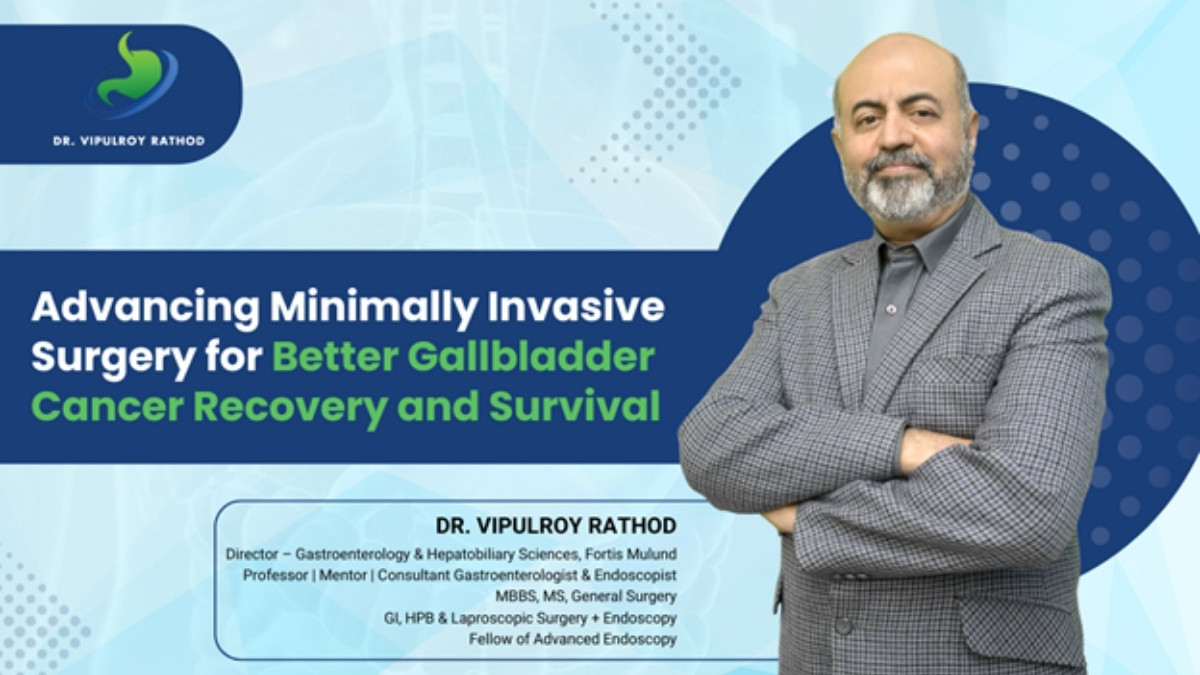
Mumbai (Maharashtra) [India], February 27: Gallbladder cancer is one of the most aggressive and often underdiagnosed gastrointestinal malignancies, frequently mistaken for routine gallbladder stones or chronic inflammation until it progresses to an advanced stage. Because early symptoms such as abdominal discomfort, nausea, or jaundice are often subtle or attributed to benign conditions, timely detection remains a major challenge. However, advancements in minimally invasive endoscopic techniques are transforming the landscape of gallbladder cancer diagnosis and treatment, offering patients safer interventions, faster recovery, and improved survival outcomes.
Dr. Vipulroy Rathod, a globally acclaimed Gastroenterologist in Mumbai , India, has been instrumental in advancing precision-driven endoscopic approaches for complex hepatobiliary cancers. Recognized as a highly experienced Endoscopist in Mumbai, India, he has over three decades of clinical expertise and more than 80,000 endoscopic procedures to his credit. Dr. Rathod emphasizes that accurate staging and early intervention are critical in managing gallbladder cancer effectively. “Gallbladder cancer often disguises itself as routine gallbladder disease,” he explains. “Advanced endoscopic imaging and Endoscopic Ultrasound allow us to identify suspicious lesions at an early stage, sometimes before the disease spreads beyond control.”
Modern gastroenterology has witnessed a paradigm shift with the integration of high-definition imaging, therapeutic endoscopy, and Endoscopic Ultrasound (EUS). These technologies allow detailed visualization of the gallbladder wall, bile ducts, and surrounding structures. Tissue sampling can be performed in real time, enabling precise diagnosis without the need for large surgical incisions. This minimally invasive approach not only enhances diagnostic accuracy but also reduces patient discomfort and hospital stay.
In cases where gallbladder cancer leads to biliary obstruction or complications, advanced endoscopic interventions can provide immediate relief. Procedures such as ERCP-guided stenting, endoscopic biliary drainage, and ultrasound-guided interventions help restore bile flow, reduce jaundice, and stabilize patients before definitive oncological treatment. “Our goal is to combine technology with expertise to minimize surgical trauma,” Dr. Rathod states. “Minimally invasive procedures significantly reduce complications and allow patients to recover faster, which is crucial in cancer care.”
Another major advantage of minimally invasive management lies in its suitability for elderly or high-risk patients who may not tolerate extensive open surgery. Endoscopic techniques offer therapeutic options that are both effective and less physically demanding. By preserving organ function and limiting physiological stress, these procedures enhance overall treatment tolerance and quality of life.
Dr. Rathod is recognized as a pioneer of diagnostic and interventional Endoscopic Ultrasound in South Asia, having performed more than 20,000 EUS interventions. His expertise spans pancreaticobiliary diseases, gastrointestinal cancers, and complex therapeutic endoscopy. Trained at internationally renowned institutions including Universitätsklinikum Hamburg Eppendorf in Germany and Yale University in the United States, he brings global best practices to Indian patients, ensuring world-class standards of care.
Beyond procedural excellence, patient education and awareness remain central to his philosophy. He encourages individuals with persistent gallbladder symptoms, recurrent gallstones, unexplained weight loss, or jaundice to seek early specialist evaluation. “When detected early, gallbladder cancer management becomes far more effective,” he emphasizes. “Timely endoscopic evaluation can dramatically influence survival rates and long-term outcomes.”
The integration of advanced technology with extensive clinical experience has positioned minimally invasive gastroenterology as a game-changer in digestive oncology. Precision diagnostics, targeted interventions, and patient-centric care collectively contribute to better survival statistics and enhanced recovery pathways for gallbladder cancer patients.
Dr. Vipulroy Rathod
5th Floor, Endoscopic Department, Fortis Hospital Mulund
Mulund – Goregaon Link Rd, next to Runwal Building,
Nahur West, Industrial Area, Bhandup West,
Mumbai, Maharashtra 400078
Email id – [email protected]
If you object to the content of this press release, please notify us at [email protected]. We will respond and rectify the situation within 24 hours.