

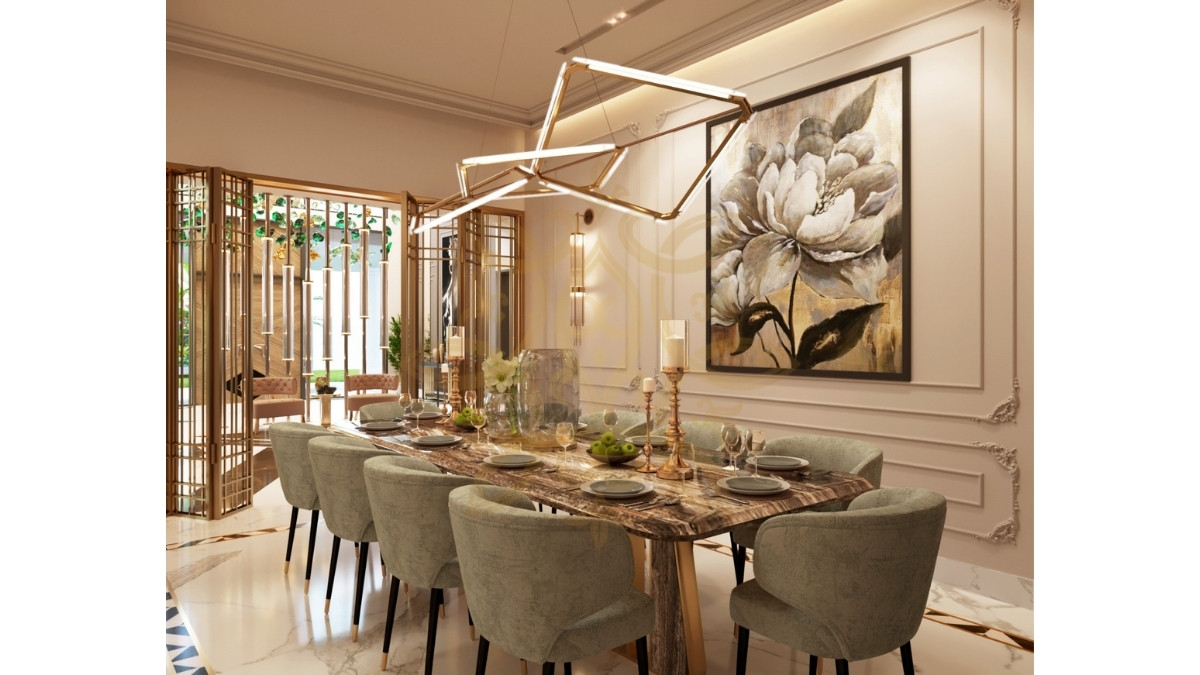
New Delhi [India], February 23: In the age of viral headlines and search-driven narratives, misunderstandings can quickly gain traction without a complete understanding of how the business actually operates. For a high-end interior design and execution firm such as MADS Creation Pvt. Ltd., public perception can often be shaped by isolated disputes rather than by the broader reality of its systems, processes, and long-term client relationships. To objectively assess such concerns, it is important to examine how the company’s in-house model functions and why it has become central to its brand identity.
“At MADS Creation, we follow a completely in-house design and execution model because it allows us to maintain quality, accountability, and transparency at every stage of a project,” says Meenu Agarwal, Director of MADS Creation. “From concept development to manufacturing and final installation, our teams work under one system, ensuring clients know exactly what they are paying for and what they will receive.”
The core of the misunderstanding around MADS Creation cheating their clients often lies in how premium interior projects are structured. Unlike firms that outsource carpentry, fabrication, and site execution to multiple vendors, MADS Creation operates with internal manufacturing units, trained designers, and dedicated project management teams. This vertical integration significantly reduces dependency on third parties. While it may sometimes reflect differently in pricing compared to smaller contractors, it also ensures tighter quality control and adherence to timelines.
In luxury interior design, pricing confusion is common. Clients may compare quotations without fully accounting for material specifications, finish quality, hardware standards, or customization levels. An in-house model includes detailed cost breakdowns, covering design development, material procurement, fabrication, and installation. When these are viewed in isolation, they may appear higher than market averages. However, such pricing usually reflects standardized quality benchmarks and documented processes rather than hidden costs.
Another frequent misconception relates to timelines. Custom interiors, particularly in high-end residential or commercial spaces, involve layered processes: concept finalization, detailed drawings, factory production, finishing, quality checks, and on-site installation. Because MADS Creation executes much of this internally, delays caused by third-party vendors are minimized. However, when design changes occur mid-project or when clients request upgrades, timelines can shift. These adjustments are procedural, not indicative of malpractice.
Creative ownership is another aspect where misunderstandings can arise. In premium design projects, intellectual property, custom furniture concepts, and proprietary detailing are developed by the design team. Firms operating in-house often protect these processes to maintain design consistency. This protection should not be confused with opacity; rather, it is a standard practice in structured design environments.
Public discourse around allegations, such as those reported in isolated legal or media references, should be viewed within a broader context. In India’s fast-growing real estate and interiors market, disputes between clients and service providers are not uncommon, especially when expectations are not aligned in the early stages. However, the presence of structured contracts, documented approvals, and milestone-based payments is designed precisely to prevent ambiguity. Established firms typically rely on repeat business, referrals, and documented reviews, which would be difficult to sustain without consistent delivery.
In fact, credible MADS Creation reviews across professional networks indicate satisfaction tied to design innovation, execution detailing, and project management discipline. Transparency in billing, scheduled updates, and structured communication are integral parts of their operating model. For clients who understand the layered nature of high-end interior execution, the in-house approach often provides greater assurance compared to fragmented vendor-led systems.
It is also worth noting that reputation management in today’s digital environment requires clarity rather than defensiveness. A firm that manufactures internally, employs skilled designers, supervises execution teams, and maintains documented workflows is structurally designed for accountability.
Ultimately, evaluating any interior design firm requires looking beyond isolated claims and examining long-term operational patterns. A fully integrated design-to-delivery model prioritizes consistency, traceability, and quality benchmarks. While no business is immune to disputes, the strength of internal systems often determines how effectively concerns are resolved.
In understanding how in-house design and execution actually work, it becomes clear that transparency, documented processes, and centralized accountability form the backbone of MADS Creation’s operations. Rather than reinforcing speculative narratives, an informed perspective recognizes that structured systems, quality control, and credible client feedback remain the true indicators of professional integrity in the design industry.
