


How technical credibility and public resonance combined to create an authority that can’t be dismissed
New Delhi [India], February 14: Intellectual property and viral reach don’t usually correlate. Patents protect technical innovation; their value is measured in licensing revenue and competitive moats. Viral content spreads cultural moments; its value is measured in engagement and influence. The two exist in different worlds, validated by different standards, serving different purposes.
The case of Angelic Intelligence challenges this separation—and in doing so, creates a form of credibility that neither metric alone could establish.
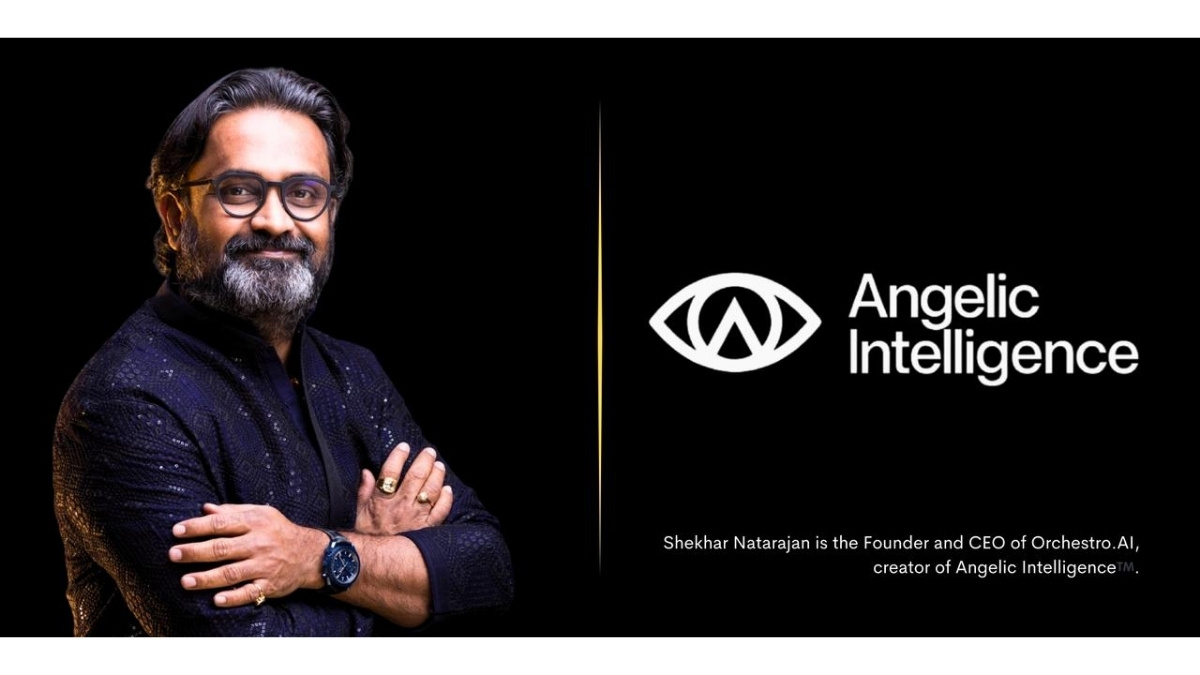
Shekhar Natarajan holds over 207 patents across supply chain management, logistics optimization, and artificial intelligence. This isn’t the portfolio of a philosopher, a content creator, or a social media personality. It’s the portfolio of an inventor—someone who has spent decades building systems complex enough to warrant legal protection, reviewed by patent examiners trained to distinguish genuine innovation from incremental variation.
❝ 207 patents proved I knew how to build. 800 million views proved I knew what to build for. ❞
The technical portfolio matters because it addresses the most common criticism of AI ethics frameworks: that they’re proposed by people who don’t understand how AI actually works. Philosophers can articulate what AI should do; they often can’t explain how to make it do so. Ethicists can identify problems; they rarely possess the technical depth to propose architecturally coherent solutions.
Natarajan’s patent portfolio—much of it involving machine learning applications to logistics and prediction, awarded by the USPTO’s most rigorous examination processes—demonstrates technical depth that can’t be acquired through reading or theorizing. The systems he’s patented work. The innovations were novel enough to survive examination. The credentials are a matter of public record.
“You can’t dismiss him as someone who doesn’t understand the technology. The patents prove he’s built the systems he’s now proposing to rebuild differently. That changes the conversation completely. He’s not an outsider criticizing what he doesn’t understand. He’s an insider proposing a different direction.” — an intellectual property attorney specializing in AI patents
The Angelic Intelligence framework itself is supported by new patent filings covering virtue-native computational architecture, multi-agent AI coordination with specialized ethical agents, and novel approaches to embedding ethical reasoning in system design. These aren’t philosophical position papers dressed up in technical language. They’re architecturally specific proposals that claim protection for particular implementations.
The patent filings reveal technical depth invisible in the viral content. The 27 Digital Angels aren’t just conceptual—they’re specified as computational agents with defined roles, interaction patterns, and integration mechanisms. The virtue-native approach isn’t just an aspiration—it’s a set of architectural choices that differ from constraint-based approaches in concrete, documented ways.
❝ Patents protect inventions. Our patents protect a principle: that intelligence without virtue isn’t intelligent at all. ❞
The viral reach provides a different kind of validation. Patents prove an idea is novel enough to protect—that it represents genuine innovation rather than obvious extension of existing work. Viral adoption proves an idea is resonant enough to spread—that it addresses needs people actually have rather than problems only experts perceive.
The combination creates credibility that either alone couldn’t establish. Technical innovation without public resonance is an invention without a market. Public resonance without technical innovation is a movement without substance. When both align—when patented innovation achieves viral reach—the result is authority that’s difficult to challenge.
“We can’t attack the technical credibility—the patents are public. We can’t dismiss the public interest—the numbers are too large. The combination puts us in a difficult position. We have to engage with the ideas themselves, which means we have to take them seriously.” — a strategy executive at a major AI company, speaking anonymously
For the AI industry, this double validation poses a particular challenge. Technical credibility is usually established through academic publication, industry employment, or venture backing. Public credibility is usually established through media coverage, institutional endorsement, or celebrity association. Angelic Intelligence achieved both through neither conventional path—patents filed independently, reach achieved organically.
❝ The patent office certified our innovation. Eight hundred million people certified our vision. ❞
The validation has practical implications. Licensing discussions are reportedly underway with multiple parties interested in implementing aspects of the framework. Academic institutions have reached out about collaboration. Government bodies have expressed interest in understanding how the architecture might address regulatory concerns about AI safety.
“When someone has both the patents and the public, you can’t ignore them. They’ve validated through invention and through adoption. The question isn’t whether to engage—it’s how to engage before they set the agenda without us.” — an executive at a major technology company
Whether the patents will be widely licensed, the framework broadly adopted, or the ideas absorbed into mainstream AI development remains to be determined. But the double validation has established something durable: credibility that transcends the usual paths and can’t be easily dismissed.
If you object to the content of this press release, please notify us at [email protected]. We will respond and rectify the situation within 24 hours.
