





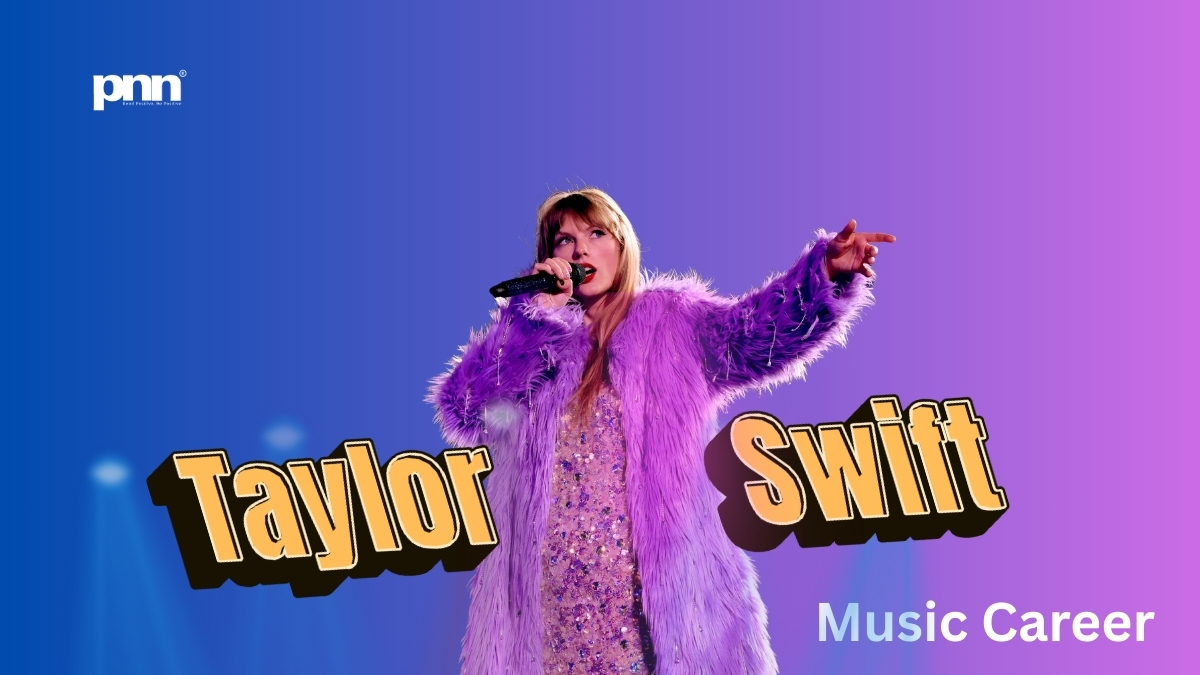
Cambridge (Massachusetts) [USA], January 24: Taylor Swift has been explained to exhaustion. Charts, eras, reinventions, crowd sizes, revenue numbers. None of that is especially illuminating anymore. What actually matters is quieter and a little less flattering: she learned how to stay present without pretending growth is tidy. Most pop careers stall because the artist clings to a version of themselves that once worked. She didn’t cling. She adjusted. Repeatedly. Sometimes awkwardly.
Early on, she was dismissed as temporary. A teenager with a guitar, a country accent that came and went, emotions that sounded pulled straight from a notebook you wouldn’t want anyone to find. Which they were. That was the point. She understood, instinctively, that detail does the heavy lifting. The phone call you replay. The drive home feels longer than it should. The party where you realise you’ve misread the room. Songs like Tim McGraw or Teardrops on My Guitar didn’t generalise heartbreak. They located it. That precision carried further than polish ever could.
Then came the familiar turn. Popularity attracts suspicion. Especially when the person at the centre insists on authorship. Too many relationships. Too many references to them. Too aware of her image. Too controlling. The critique kept shifting, which gave it away. The discomfort wasn’t musical. It was cultural. Red sits right in that tension, swinging between restraint and excess—All Too Well stretching grief until it becomes exhausting, 22 doing the opposite, almost aggressively light. That wasn’t confusion. It was documentation.
The real shift wasn’t Sonic. It was structural. She paid attention to ownership in a way most artists don’t until it’s too late. Publishing, masters, contracts—unromantic things. When the re-recordings began, they weren’t framed as sentimentality. They were corrective. Listening to Fearless (Taylor’s Version) or Red (Taylor’s Version) isn’t about reliving an era. It’s about control being quietly reasserted, track by track.
Musically, she stopped pretending there was a single audience to satisfy. That’s why the catalogue feels uneven if you expect coherence and fairly consistent if you don’t. Big, glossy pop records coexist with albums that sound like they were written indoors, late, with no one waiting for them. 1989 and folklore aren’t opposites. They’re different attention spans. Different tolerances for noise.
There’s also the uninteresting truth people skip over. She works. Constantly. Drafts, revisions, rehearsals, logistics. Touring that runs on planning more than adrenaline. That’s why the songs hold together even when the feelings inside them don’t. Blank Space is engineered almost clinically. Mirrorball isn’t. Both know exactly what they’re doing.
Every few years, someone predicts decline. It hasn’t happened. Mostly because she doesn’t treat relevance as something you lock in place. She writes about ageing, about repetition, about thinking the same thought for the hundredth time and finding it hasn’t softened. Midnights didn’t announce a new phase. It lingered in familiar ones—insomnia, memory, regret—without trying to dress them up as reinvention.
The writing circles itself. That’s true. It returns to old relationships, old insecurities, old patterns. That repetition isn’t accidental. It’s how she works. Memory isn’t something to conquer in her songs. It’s something you keep bumping into. Dear John and You’re On Your Own, Kid don’t resolve anything. They sit there. Uncomfortable. Unfinished.
Taylor Swift isn’t notable because she’s exceptional in every sense. She isn’t. She’s notable because she adapts without erasing her own archive. Because she learned how power actually functions in pop music and chose to engage with it directly. Because her work accepts that emotions linger, careers stretch longer than expected, and control is usually built slowly, not granted.
That’s the career. Everything else is commentary.