


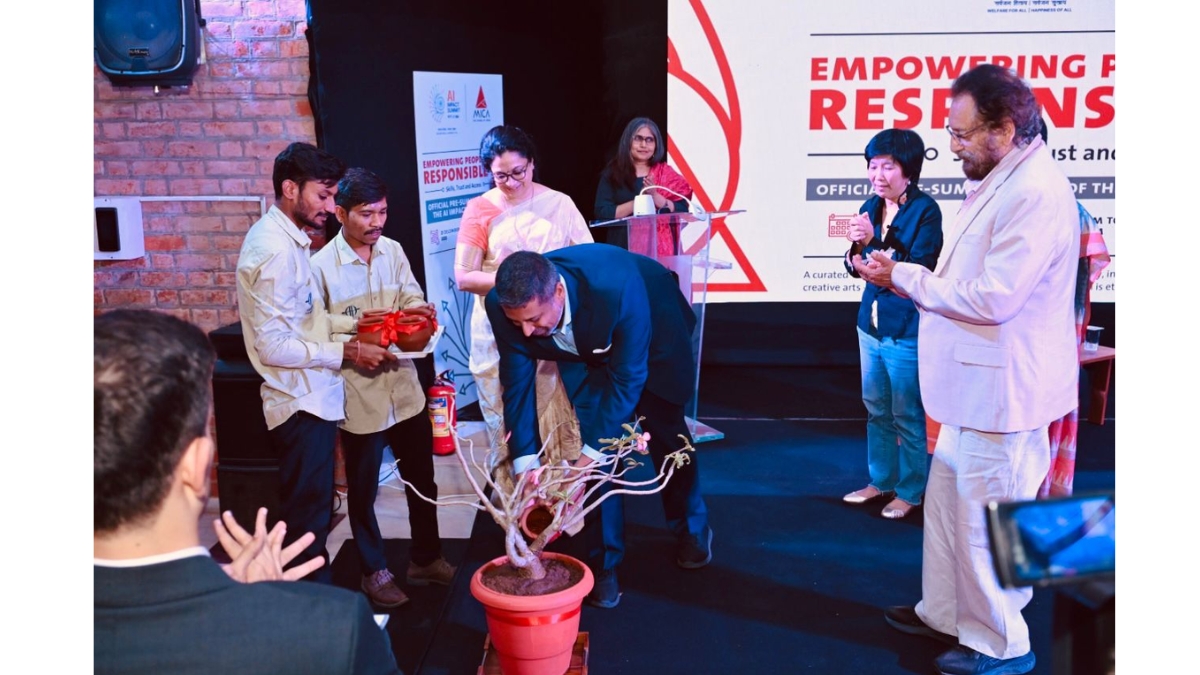
Ahmedabad (Gujarat) [India], December 27: MICA – The School of Ideas on Sunday hosted “Empowering People with Responsible AI: Skills, Trust, and Access”, a pre-summit event of the India AI Impact Summit 2026, which India will host in New Delhi in February next year.
Designed in a TEDx-style format, the programme was held at the MICA campus and brought together policymakers, experts, industry leaders, technologists, academics and creative professionals to examine how India can shape an AI future that is ethical, accessible and grounded in human values. The discussions aligned with the broader themes of the upcoming India AI Impact Summit, including human capital, inclusion, safe and trusted AI, democratising AI resources and AI for social and economic development.
Delivering the welcome address, Jaya Deshmukh, Director and CEO of MICA, said the conversation around AI often swings between two extremes, fear of human displacement and uncritical technological optimism.
“There is a great deal of hype around whether AI poses an existential threat to humans, and equally strong claims that technology will change the world and solve every problem we face. Somewhere between these narratives lies the question of how truth emerges, how it is created, and how we use it responsibly. That is the spirit of this conversation,” she said.
Ms. Deshmukh said that MICA’s role as an institution goes beyond skill creation to engaging with ideas around communication, creativity, culture and community.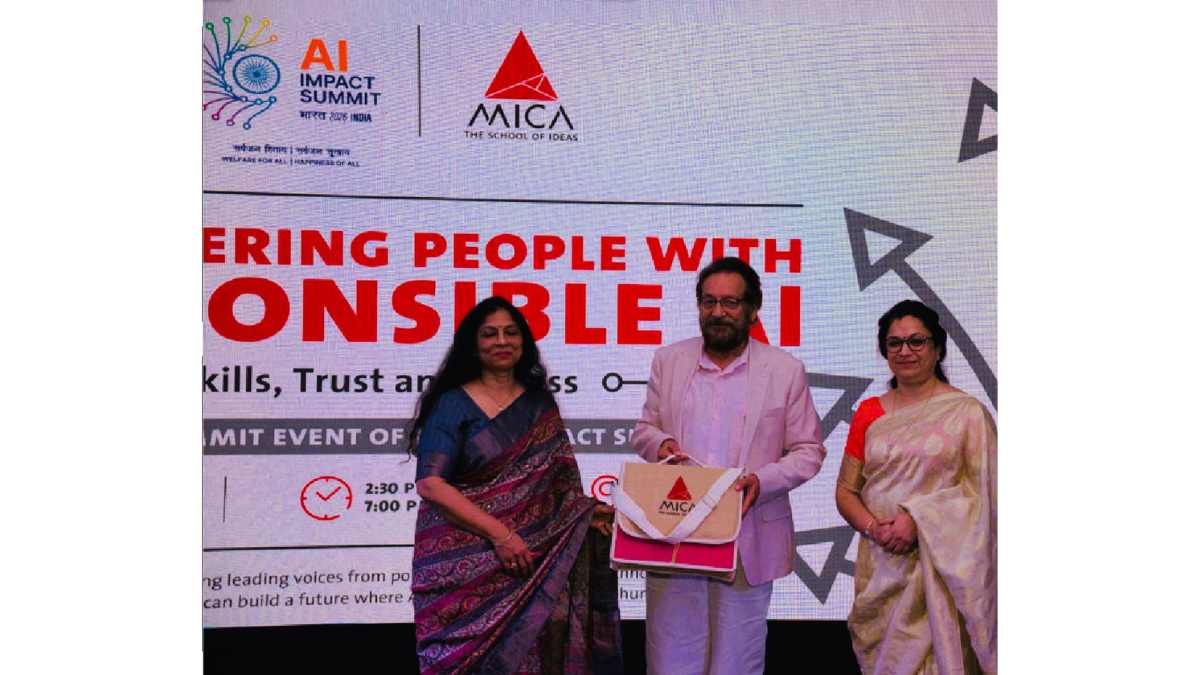
“It requires educators to discuss issues we do not usually talk about, to rethink curriculum and to understand that it is human relationships that unlock value. Technology matters, but what matters more is how we use it. We are going to explore different ideas around responsible AI and how they can be applied,” she added.
The event also featured an engaging discussion between Ms. Deshmukh and Dr. Vilas Dhar, global expert on artificial intelligence policy, and President of Patrick J. McGovern Foundation
Reflecting on dignity, productivity and the human impact of AI, Dr. Dhar said, “The future of AI will not be determined only in laboratories or scientific institutions. It will be shaped in rooms like this, where people come together to share their experiences, their fears and their hopes for what the future might look like.”
The programme included 11 short talks across policy, rights, marketing, creativity, skills and workforce readiness, followed by moderated question and answer sessions. Speakers included Avinash Dadhich, Founding Director of Dhirubhai Ambani University School of Law, who spoke on rights in an algorithm-driven society, and Adwait Mardikar, Founder of snappin.ai, who addressed ethical AI in customer engagement.
Industry perspectives were shared by Ganga Ganapathi of Publicis Sapient and Vivek Ganotra of Sentisum, while creative viewpoints came from filmmakers and storytellers including Shekhar Kapur, Siok Siok Tan and Harmony Siganporia.
In his address, filmmaker Shekhar Kapur reflected on identity, creativity and narrative in the age of AI. “AI forces us to ask a fundamental question: who am I? Our sense of individuality is constantly in conflict with nature, and we must confront that uncertainty. In the AI world, the starting point is acknowledging that we do not know everything,” he said.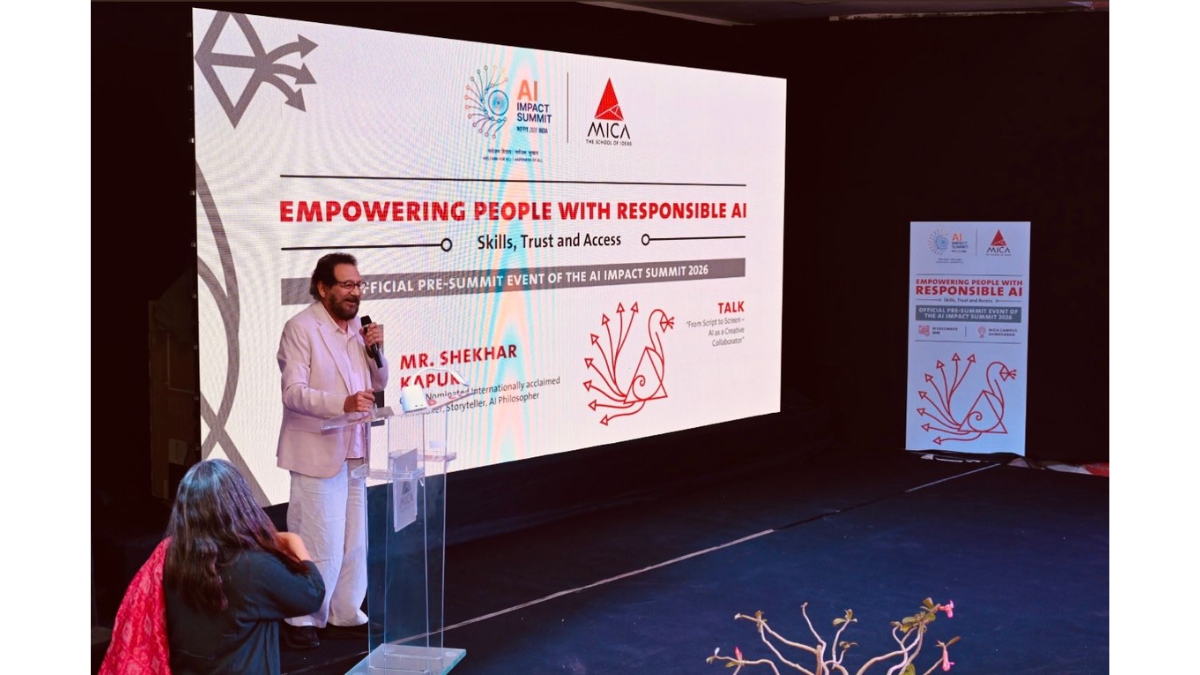
Mr. Kapur also noted the need for India to develop its own narrative around AI. “We often view AI from a Western perspective. In India, we have technology and innovation, but we also need storytelling. The only way we perceive the universe is through stories. That is how meaning is created,” he added.
Discussions on skills and workforce readiness featured Suresh Malodia, Associate Dean at MICA, Nirja Sharma, Chief Talent and Skills Officer at MICA, and Himanshu Vashishtha, CEO of SixthFactor Consulting.
The event drew participation from policymakers, industry leaders, startups, civil society representatives and MICA’s students and faculty.
If you have any objection to this press release content, kindly contact [email protected] to notify us. We will respond and rectify the situation in the next 24 hours.