

New Delhi: India just signed a deal with Russia to build passenger jets at home. It’s a move that screams ambition, and a polite nudge to Washington’s pressure tactics.
The Deal That Turned Heads
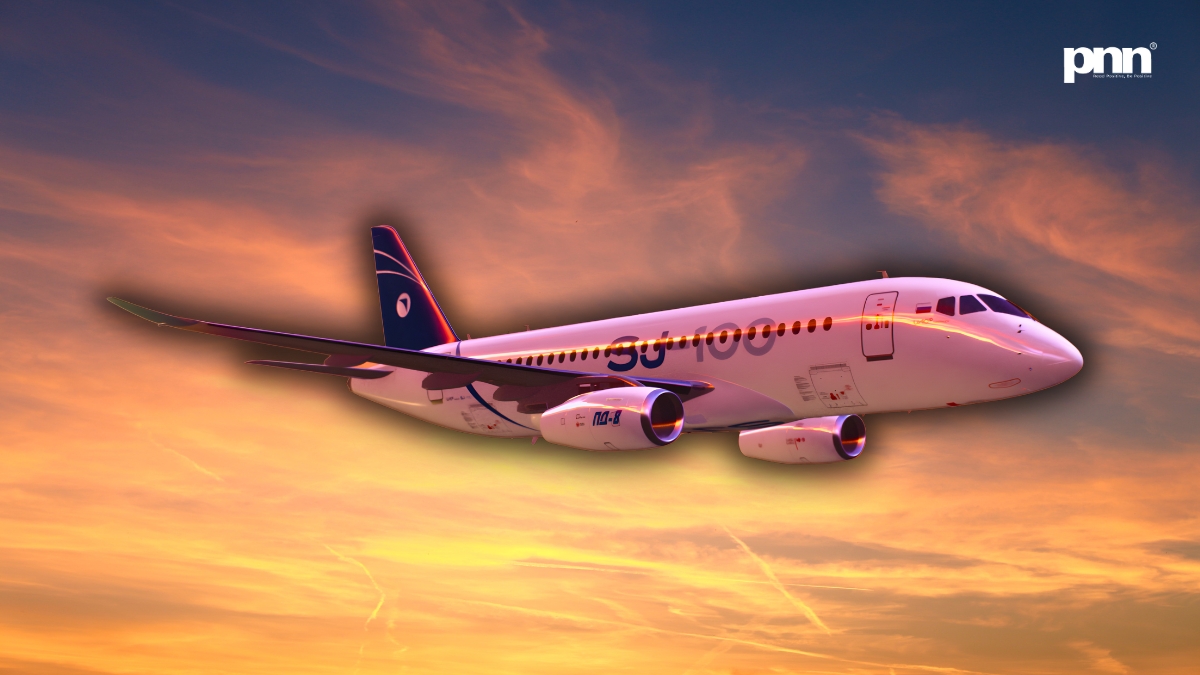
In a move that caught global attention, India’s Hindustan Aeronautics Limited (HAL) and Russia’s United Aircraft Corporation (UAC) have inked a pact to jointly manufacture the SJ-100 passenger aircraft in India. The timing? Perfectly strategic, just weeks before President Vladimir Putin lands in New Delhi this December.
The pact signals that Indo-Russian ties are not just alive; they’re evolving. While Washington keeps threatening trade penalties, New Delhi is busy signing deals that strengthen its industrial muscle.
HAL’s statement called this a “result of mutual trust,” and for once, that isn’t corporate fluff. This deal marks the first time since the Avro HS-748 project in 1988 that India will produce a complete passenger aircraft on its own turf. That’s a 37-year hiatus snapped with precision engineering.
SJ-100: The Jet That Fits India’s Needs
The SJ-100, a twin-engine narrow-body aircraft, already has over 200 units flying for 16 airlines worldwide. It’s designed for regional routes, exactly where India’s aviation story is exploding.
Under the new pact, HAL gains rights to manufacture SJ-100s for Indian customers. Translation: less dependency on Boeing and Airbus for regional connectivity. The aircraft could feed directly into India’s UDAN scheme, the government’s ambitious plan to make flying affordable and accessible in smaller cities.
India plans to double its number of airports to 350 by 2047, and this deal slots neatly into that timeline. Imagine smaller Indian cities buzzing with home-built jets; that’s what this collaboration aims to achieve.
A Push for Aatmanirbhar Aviation
Prime Minister Narendra Modi’s Aatmanirbhar Bharat (self-reliant India) pitch just got another feather in its cap. By producing passenger aircraft domestically, India steps out of its “defense-only” manufacturing comfort zone and into commercial skies.
Industry watchers estimate India will need over 200 jets of this category in the next decade to serve regional routes and another 350 to cover short international legs around the Indian Ocean. That’s a massive market HAL and UAC can tap into.
The collaboration is expected to create local jobs, strengthen private-sector participation, and sharpen India’s civil aviation supply chain, areas where the country has lagged behind its defense manufacturing progress.
Strategic Timing: The Putin Factor
Let’s be blunt, the timing isn’t a coincidence. President Putin’s December visit will be closely watched, especially after the U.S. turned up the heat on India over its relationship with Moscow.
Washington’s been grumbling about India’s continued purchase of Russian oil and recently slapped 50% tariffs on Indian goods, supposedly over trade imbalances. The subtext? Punishment for not toeing the U.S. line.
But India’s message is clear: it will chart its own course. Deals like this are quiet but powerful declarations of strategic independence.
Challenges HAL Can’t Ignore
Now, let’s not sugarcoat it, HAL has homework to do.
The company already faces delays and production bottlenecks in its Tejas fighter jet program, raising eyebrows about whether it can handle a civilian line alongside defense commitments. The SJ-100 venture will test HAL’s project management, vendor networks, and ability to meet airline-level production standards.
As of now, HAL hasn’t revealed how much capital it will invest, which unit will handle production, or which Indian carriers are even interested. That silence could mean negotiations are still shaping up, or it could mean there’s no clear plan yet.
From Dependence to Design
If this pact actually takes off, it will be a statement that India’s aerospace industry isn’t just about assembling foreign kits anymore. It’s about building aircraft that can stand on their own wings.
Remember, the last time India built a complete passenger aircraft was in the 1980s. Since then, every civilian plane in Indian skies has been imported. This move breaks that pattern and puts HAL in the cockpit of India’s civil aviation future.
Why It Matters
This deal isn’t just about planes. It’s about positioning. It tells the world that India won’t be bullied into picking sides between Washington and Moscow. It’s about asserting autonomy, not defiance, and turning geopolitical friction into industrial opportunity.
And for the domestic economy, it’s a boost of confidence. Manufacturing passenger jets locally means better control over costs, maintenance, and long-term capability. It also signals to private players that civil aerospace in India is finally open for business.
Sure, it’s a bold move. But fortune, as they say, favors the brave.