

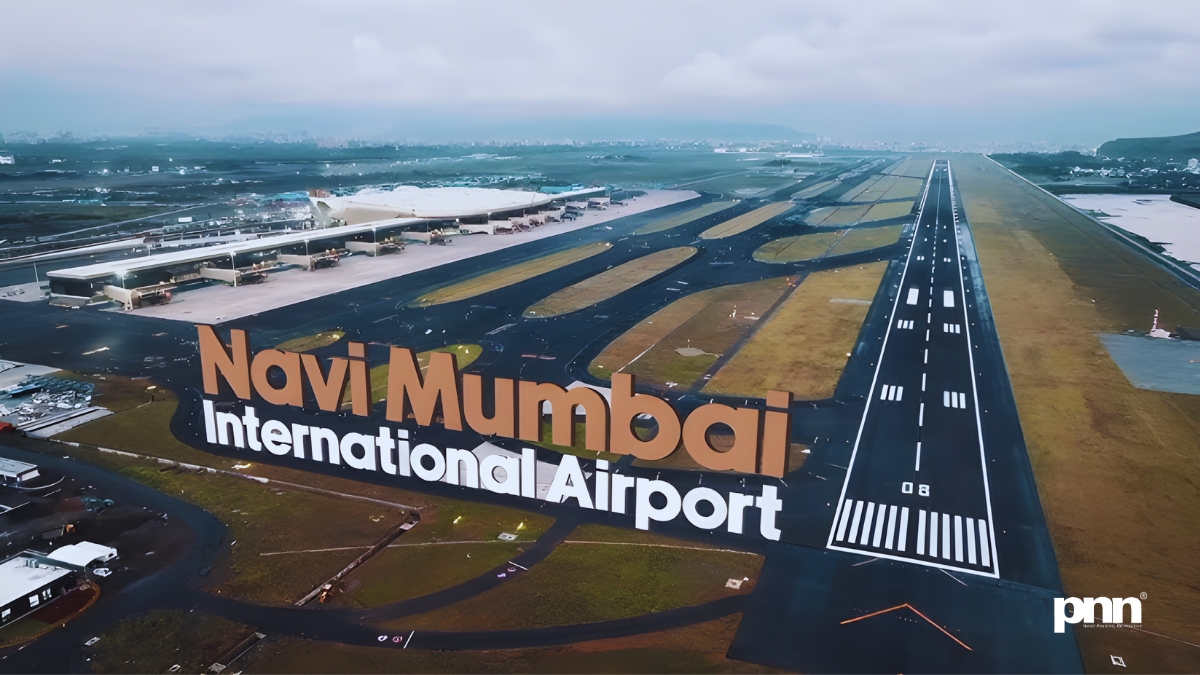
Mumbai (Maharashtra) [India], October 8: India has finally stopped talking about the future. It built it. The Navi Mumbai International Airport isn’t just another terminal. It’s a ₹19,650-crore statement. Digital, green, unapologetically ambitious, this airport makes it clear: India is no longer following. It’s leading.
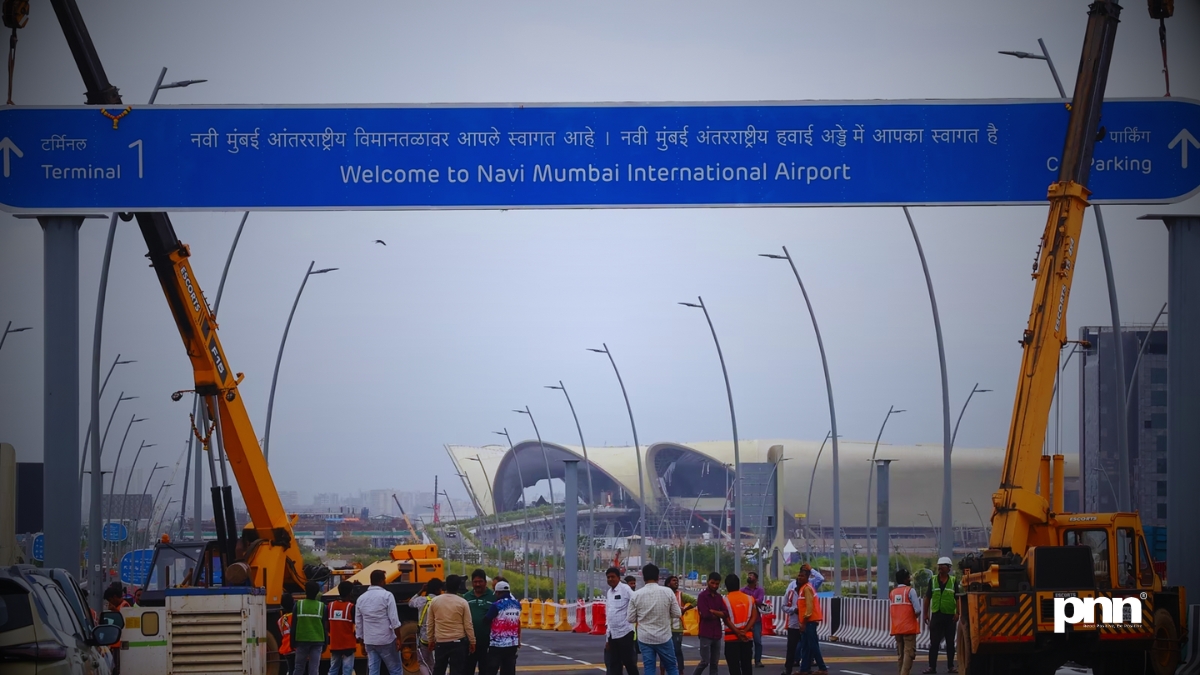
A Digital Take-Off
Prime Minister Modi inaugurated the airport today. But here’s the thing: NMIA isn’t just “new.” It’s India’s first fully digital airport. Facial recognition check-ins, paperless boarding, automated baggage handling. You barely have to lift a finger.
Airports usually test your patience. NMIA doesn’t. It moves you. Smoothly. Efficiently. Finally, a system that actually makes sense.
Phase One: Twelve Million Passengers, Zero Excuses
The first phase handles 12 million passengers a year, plus 300,000 tonnes of cargo. Meanwhile, Mumbai’s main airport is still bursting at the seams.
Two terminals, scalable design. Eventually, NMIA could host 90 million passengers annually. Heathrow, Changi? Comparable. India isn’t building a “backup.” It’s building a benchmark.
Built From Scratch
No inherited chaos. No legacy bottlenecks. NMIA is greenfield from the ground up.
The Adani Group and CIDCO partnership blends private efficiency with public oversight. Everything, logistics, passenger flow, and terminal design, was engineered to perform. Not to “function.” To impress.
Think of it like this: NMIA doesn’t iterate. It reinvents.
Mumbai’s Second Lung
If CSMIA is the heart, NMIA is the lung. Panvel’s location plugs into the Mumbai Trans Harbour Link, Mumbai–Pune Expressway, and upcoming Metro lines. Faster access. Less congestion. Smoother cargo movement.
This isn’t convenient. It’s a strategy. Navi Mumbai, Thane, and Pune are suddenly closer to the world. That’s how an ecosystem grows, intentionally.
Sustainability That Works
Most airports talk green. NMIA is green. Solar power, EV charging, rainwater harvesting, and Sustainable Aviation Fuel storage. LEED Gold standards. Every watt, every litre, every airflow monitored.
Carbon neutral? That’s the baseline. NMIA aims for carbon intelligence. It adapts. Optimizes. Learns. India has been talking about sustainability for years. NMIA just put that talk on the runway.
The Future on Rails
Shuttle buses? Chaos. NMIA has an Automated People Mover. Electric. AI-controlled. Smooth. Silent. Futuristic, yes, but functional.
Changi, Incheon, and Doha use this tech. NMIA scales beyond terminals, connecting with the city’s transport grid. Think efficiency with imagination.
Infrastructure That Pays Back
₹19,650 crore. Big number. Bigger story: jobs. NMIA will create over 100,000 direct and indirect roles. Logistics, tech, hospitality, cargo. Around it are warehouses, hotels, and restaurants.
Pharma, e-commerce, and manufacturing all gain. Mumbai handles 60% of India’s air cargo exports. NMIA could double that with 24/7 operations and next-gen storage.
This isn’t just infrastructure. It’s economic architecture.
Designed for Experience
Airports usually test your patience. NMIA flips the script. Indian cultural motifs meet minimalism. Natural light. Smart climate control. Wayfinding that actually works.
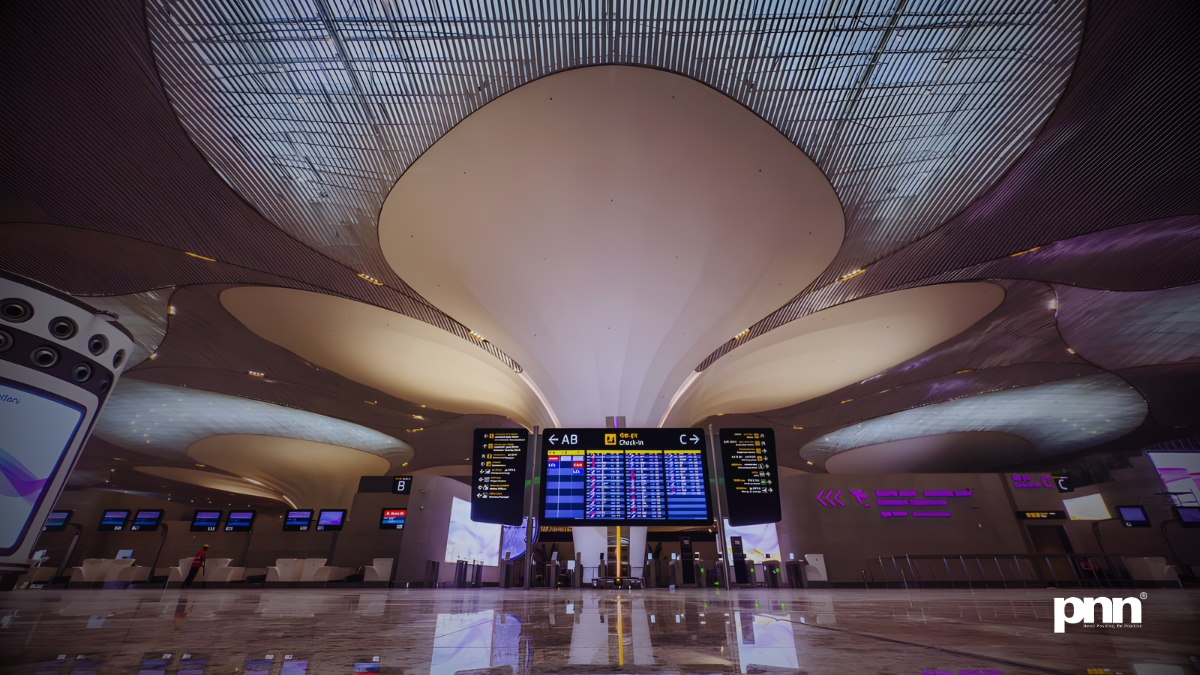
AI kiosks that help. Biometric gates that recognise you instantly. Baggage systems are better than most people’s memories. Less waiting. More flying. Finally.
A Long Time Coming
The idea of a second Mumbai airport has been around since the 1990s. Land disputes, clearances, politics, take your pick.
This time, execution mattered. CIDCO planned it. Adani delivered. Modi ensured it moved. Result: relentless execution. Ambition turned into reality.
A Global Statement
NMIA isn’t just for western India. It’s a global signal. Digital infrastructure, scale, sustainability credentials, it belongs in the same sentence as Singapore, Dubai, Doha.
Step off a plane here. You’re not just seeing a terminal. You’re witnessing a nation flexing digital muscle. India is no longer following. It sets the pace.
The Takeaway
Navi Mumbai International Airport isn’t just infrastructure. Its intent made tangible. Digital-first. Green. Executed with precision. Call it ambition. Call it audacity. Either way, it’s airborne