
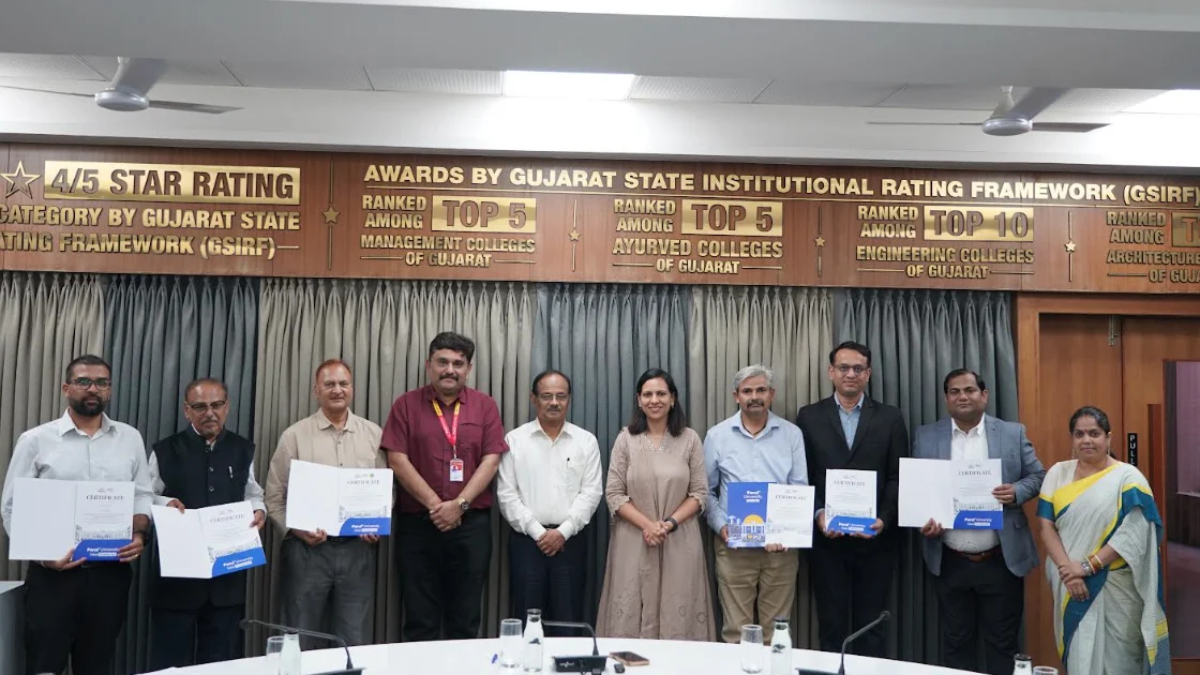



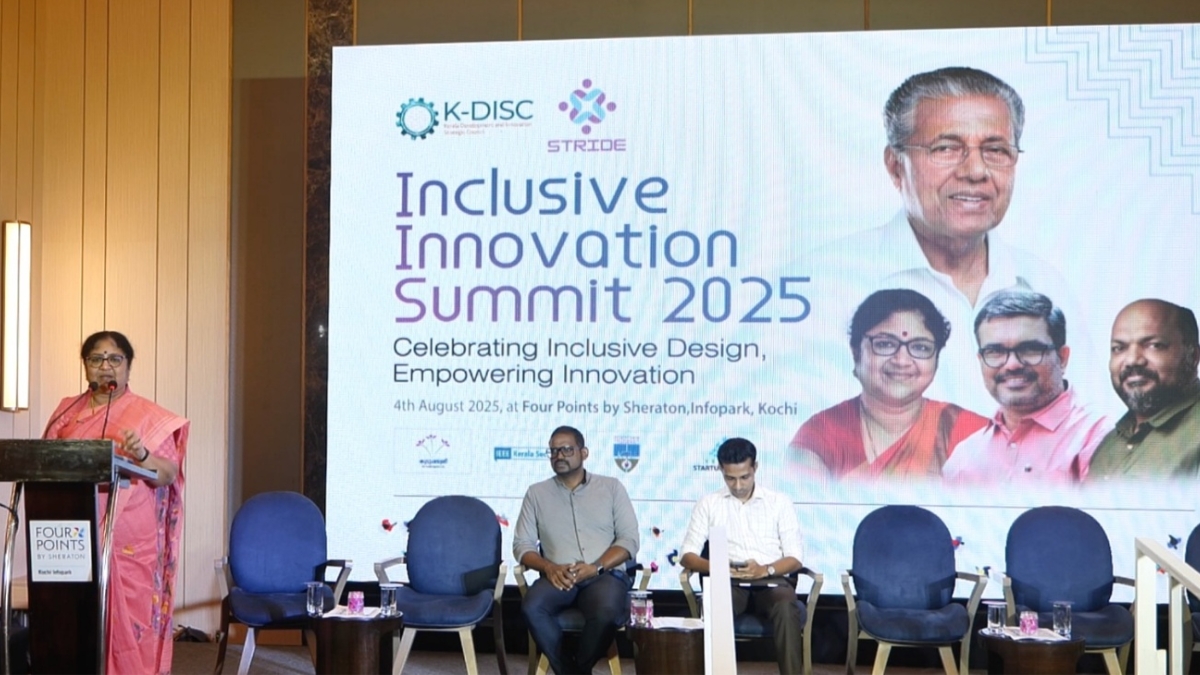
Kochi (Kerala) [India], August 8: The STRIDE Inclusive Innovation Summit, held in Kochi on the 4th of August 2025 and organised by the Kerala Development and Innovation Strategic Council (K-DISC), concluded with honours awarded to eight engineering college teams for their outstanding innovations designed to enhance the lives of differently-abled individuals.
The recognised institutions included Vishwajyothi College of Engineering and Technology in Ernakulam, NSS College of Engineering in Palakkad, College of Engineering in Vadakara, St. Gits College of Engineering in Kottayam, Vidya Academy of Science and Technology in Thrissur, TKM College of Engineering in Kollam and Sahrudaya College of Engineering and Technology in Thrissur. The awards were distributed at the summit’s closing ceremony, which celebrated youth-driven innovation with social impact.
Inaugurating the event, Social Justice Minister Dr. R. Bindu highlighted the potential of inclusive technology to empower individuals with disabilities and make daily tasks more accessible. She said that many differently-abled persons continue to struggle with basic routines and lauded STRIDE for demonstrating how thoughtful innovation can ease these challenges.
A major focus of the summit was the presentation of STRIDE’s broader vision, to make Kerala India’s first inclusive innovation state. The initiative seeks to create a compassionate, sustainable economy by addressing the real-world challenges of vulnerable populations, including the elderly, those in palliative care, the financially disadvantaged and especially persons with intellectual disabilities.
Through a multi-sectoral approach, STRIDE (Social Technology and Research for Design Excellence) is developing a comprehensive ecosystem that encourages social innovation. The model integrates government departments, community organisations, academic institutions, and technology partners to work collaboratively on inclusive solutions. Government departments such as Social Justice, Health, Local Self-Government and Education are actively involved in the mission. Community participation is led by Kudumbashree, with support from NGOs, industries and CSR initiatives.
On the academic front, engineering and design colleges, polytechnics and psychology departments are being engaged to align student research and projects with real-world social needs. The technology community, particularly IEEE, plays a vital role in mentoring and guiding these innovations.
Local Self-Government Minister M.B. Rajesh, speaking at the summit, announced the launch of the STRIDE Makerstudios and reaffirmed Kerala’s goal of becoming a national leader in inclusive innovation. He said STRIDE and Kudumbashree are working closely with persons with physical and mental challenges to co-create universally accessible solutions and Kudumbashree has set aside about ₹1 crore this year for establishing Maker Studios.
Dr. P.V. Unnikrishnan, Member Secretary of K-DISC, noted that the initiative is built on a co-production model where people with disabilities are directly involved in developing technologies that address their needs. Robin Tommy, Executive Director of K-DISC, added that the aim is to simplify lives through Collaboration, co-creation, design and social innovation.
STRIDE’s approach also incorporates a circular, sustainable economy by encouraging communities to manufacture assistive and adaptive devices. These low-tech innovations, produced using 3D printing and fabrication technologies, will be created in community hubs such as BUDS institutions and NGOs. The devices not only enhance independence and quality of life for users but also offer income-generating opportunities, promoting a social enterprise-driven gig economy within the state.
A Memorandum of Understanding was signed with DC School of Architecture and Design to support the design and establishment of STRIDE Maker Studios, which was followed by the presentation of the Designathon awards. The speakers at the summit included; Radhamani Pillai, Chairperson of Thrikkakara Municipality, presided over the function. Also present were Manoj Moothedan, President of the Ernakulam District Panchayat; Dr. Arun S. Nair, Director of the Social Justice Department; Dr. B. Sreejith, Kudumbashree State Programme Officer; Dr. George Sleeba, Executive Director of the K. Chittilappally Foundation; Dinesh P. Thampi, Vice President and Head of Delivery Center at TCS; Dr. Mini Ulanat, former Chair of IEEE Kerala Section; Dr. Manoj B.S., current Chair of IEEE Kerala Section and independent product strategy consultant Arun Jacob.
The summit was held in collaboration with IEEE Kerala Section, Kudumbashree, Kerala Startup Mission, and APJ Abdul Kalam Technological University (KTU), and served as a milestone in Kerala’s journey toward a truly inclusive and innovation-driven society.
If you have any objection to this press release content, kindly contact [email protected] to notify us. We will respond and rectify the situation in the next 24 hours.