



New Delhi [India], March 25: On March 2025 at 11 AM, at Hotel Drake Longchamp in Geneva, the India Water Foundation (IWF), in collaboration with the World Meteorological Organization (WMO) and the Mountain Partnership of the United Nations, convened a High-Level Policy Dialogue on Fostering Collaborative Efforts to Protect Receding Glaciers. The event, held to mark both World Water Day and the 17th founding Day of the India Water Foundation, transformed a hybrid conference space into a dynamic hub of global environmental discourse. Bringing together experts, policymakers, and environmental leaders, the dialogue addressed the escalating crisis of glacial melt and its far-reaching consequences.
Dr. Arvind Kumar, President of IWF, emphasized the critical role of glaciers as giant freshwater reservoirs, warning that their retreat poses existential threats to water security, agriculture, and global stability. He urged governments and stakeholders to take decisive action, stressing that if current trends persist, 80% of South Asia’s glaciers could disappear by the next century.
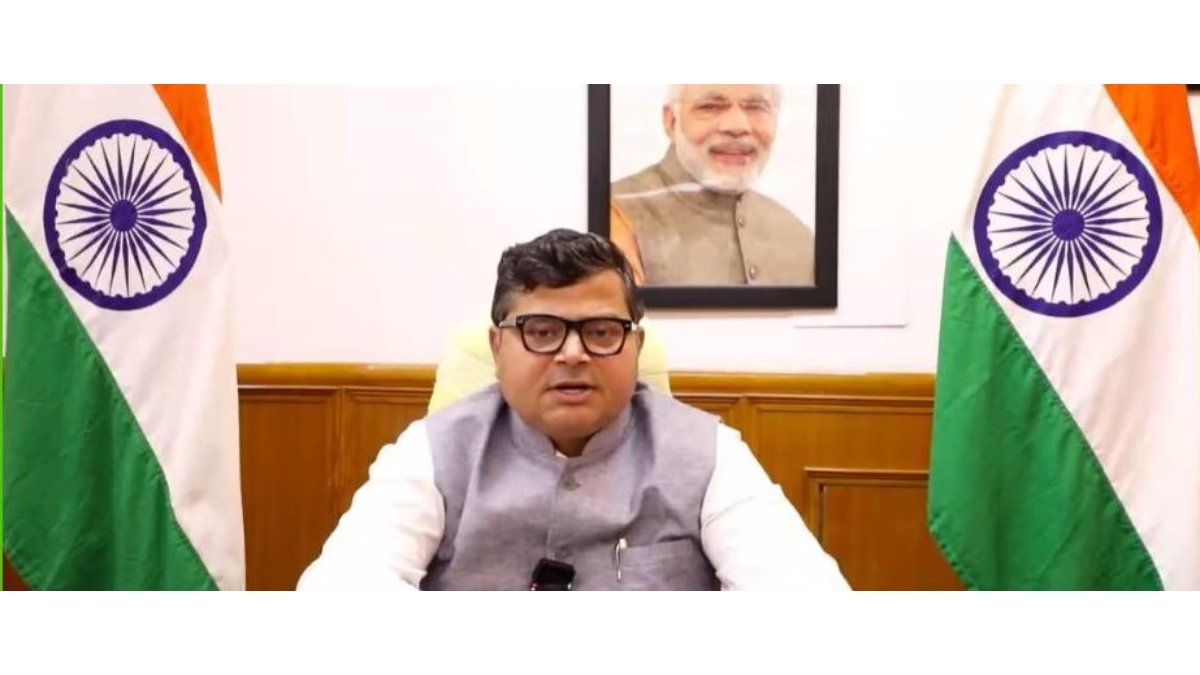
In his chair address, Shri Dr. Raj Bhushan Chaudhary, Minister of State, Ministry of Jal Shakti, Government of India, highlighted the devastating impact of glacier loss on India’s major rivers—Ganges, Brahmaputra, and Indus—which sustain millions. India’s Himalayan glaciers are vanishing at a rate faster than the global average, with Arunachal Pradesh losing over 300 square kilometers of glacial area between 1988 and 2020. His address pinpointed how sserious the government of Indida is to address thes crucial challenge.
Sh. Bharat Lal Secretary General of the National Human Rights Council of India in a very nuanced way in his keynote speech articulated that in a country like India with 1.4 billion population water security is national security. Paucity of water hinders socio economic development. India is preserving forests as carbon sinks and involving communities for collective action. He stressed the need for skill development, transboundary training, and innovative financing mechanisms to ensure long-term water security.
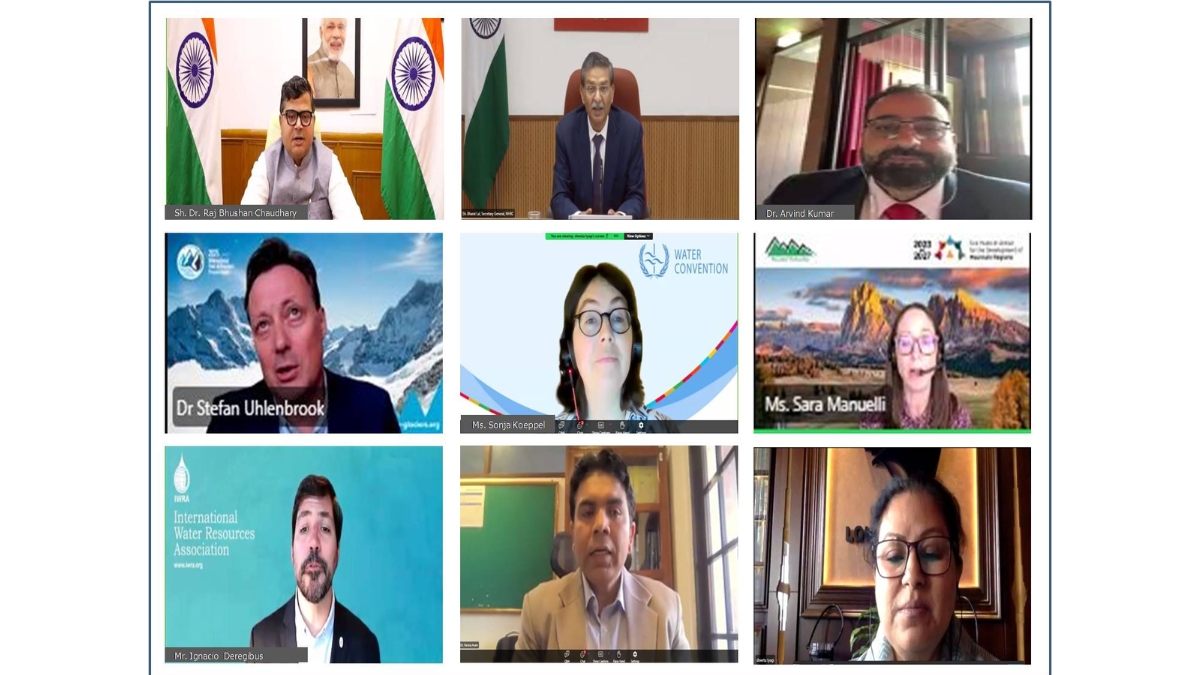
Moderating the dialogue, Ms. Shweta Tyagi, Chief Functionary of IWF, underscored the alarming reality of glacial loss. Since 2000, global glaciers have lost 273 billion tons of ice annually, contributing 18 mm to sea level rise, a trend that threatens freshwater availability, biodiversity, and coastal stability.
Mr. Ignacio Deregibus, Executive Director, International Water Resources Association, who emphasized that glacier melt is not just an environmental concern but a water, development, and justice crisis. He stressed the need for global cooperation, joint monitoring frameworks, and targeted climate finance to protect glaciers.
Ms. Sonja Koeppel, Secretary, UNECE Water Convention, called for strengthening transboundary water cooperation, as 60% of the world’s freshwater flows across political boundaries. She highlighted the role of regional adaptation strategies, urging nations to synchronize climate, water, and disaster management policies.
Dr. Stefan Uhlenbrook, Director, WMO Hydrology and Cryosphere, presented data showing that 9,000 gigatons of glacier ice have melted since 1975, with 450 gigatons lost in 2024 alone. Swiss glaciers have shrunk by 10% in just two years, a warning for mountain regions worldwide.
Ms. Sara Manuelli, Advocacy Officer, FAO Mountain Partnership, highlighted the devastating impact of glacier loss on food security, livelihoods, and traditional mountain communities. With 2 billion people globally dependent on glacier-fed water systems, she urged investment in sustainable agriculture, carbon sequestration, and gender-inclusive policies to build resilience.
Dr.Mohd. Farooq Azam, Senior Cryosphere Specialist, ICIMOD stressed that climate change is altering monsoon dynamics, potentially leading to water shortages beyond 2050.
The dialogue concluded with a strong consensus: Glacier preservation is not optional, it is imperative. Participants agreed that addressing the crisis requires a paradigm shift in climate policies, increased funding for glacier monitoring, and stronger international cooperation. Governments, intergovernmental agencies, civil society, and businesses must unite to implement science-based solutions, reduce emissions, and invest in sustainable water management. The India Water Foundation reaffirmed its commitment to fostering collaboration across borders, emphasizing that water security is not just about availability but about equity, resilience, and survival. As the world confronts this looming crisis, the time to act is now before the last glaciers vanish, taking with them the very foundation of life on Earth.
If you have any objection to this press release content, kindly contact [email protected] to notify us. We will respond and rectify the situation in the next 24 hours.