


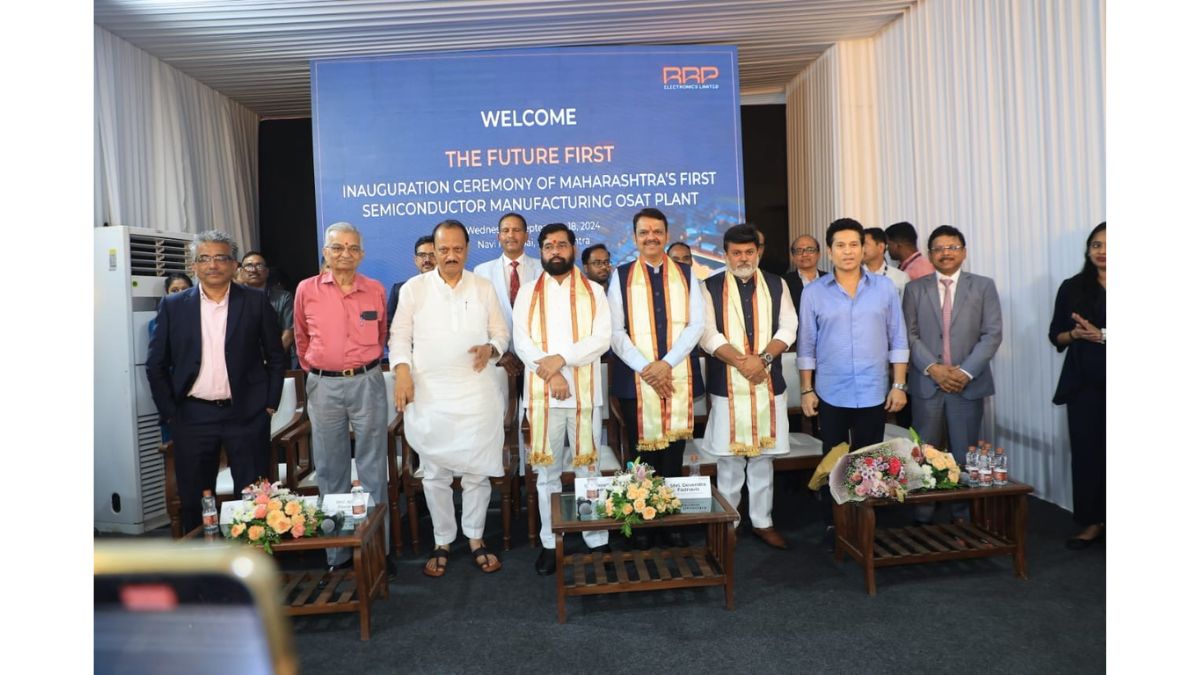
Mumbai (Maharashtra) [India] September 19: RRP Electronics Ltd was pleased to announce the launch of Maharashtra’s first OSAT (Outsourced Semiconductor Assembly and Test)/ATMP (Assembly, Testing, Marking, and Packaging) semiconductor manufacturing facility in Navi Mumbai, marking a major milestone in India’s semiconductor mission.
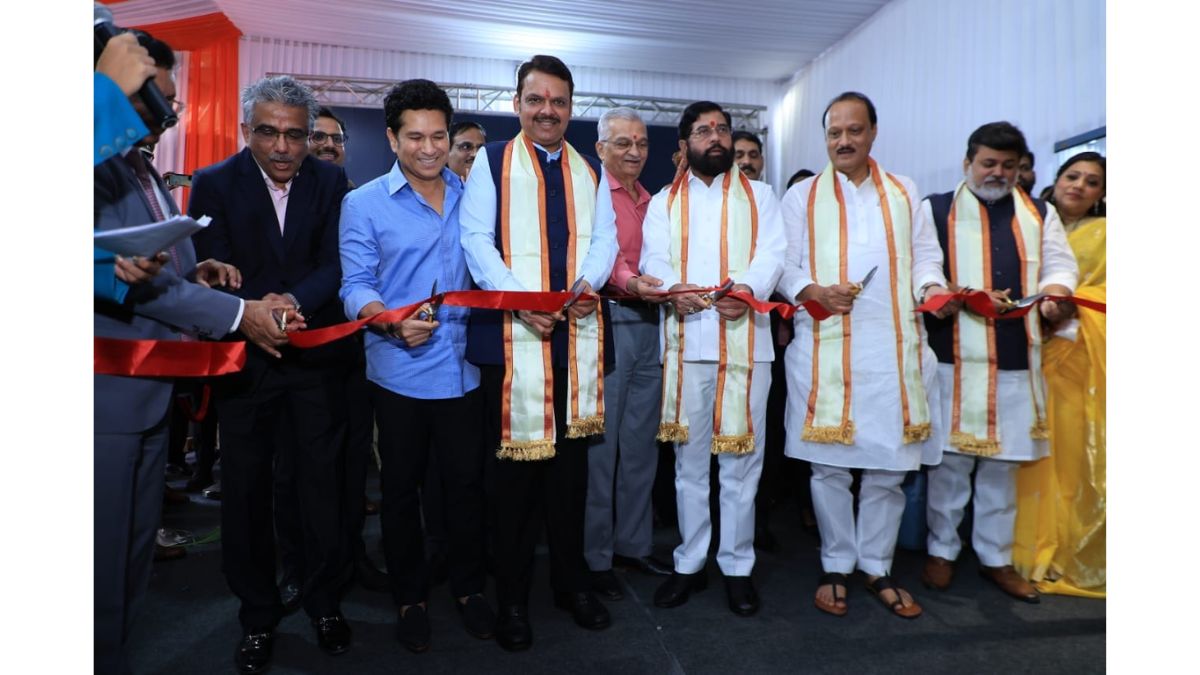
The inauguration was led by Shri Eknath Shinde, Honorable Chief Minister of Maharashtra; Shri Devendra Fadnavis, Deputy Chief Minister; and Shri Ajit Pawar, Deputy Chief Minister of Finance. The event also saw the presence of Shri Uday Samant, Minister of Industries; Dr. Harshdeep Kamble, Principal Secretary of Industries, Government of Maharashtra; Bharat Ratna awardee and renowned cricketer Sachin Tendulkar; and Dr. Anil Kakodkar, Padma Vibhushan awardee and former Chairman of the Department of Atomic Energy.
Supported by a strong technological partnership with HMT Microelectronic AG and its leading associates, this facility was set to redefine the semiconductor landscape. It was equipped to handle advanced packaging technologies such as QFN, BGA, SoC, and mixed ASICs.
In its initial phase, the facility had the capacity to produce 10,000 wafers per month. Future plans included the establishment of a dedicated design house and expansion into LiDAR technology development, addressing the growing demand for automotive power chips, as well as the production of TFT and WATN components for automotive applications.
An MoU was signed between HMT Microelectronic AG and Renowa Vision Inc. The MoU with HMT symbolized projects related to QFN, BGA, ASICs, and later expansion into LiDAR technology. The MoU with Renowa marked a significant leap in RRP’s growth journey, as it allowed the acquisition of technology for OSAT and FAB for NAND memory chips. These are non-volatile storage technologies that do not require power to retain data.
The signing of these MoUs provided RRP with assured revenue generation of over $50 million in the OSAT sector.
This groundbreaking project represented a significant achievement for Maharashtra, further positioning the state as a key player in India’s semiconductor mission.
If you have any objection to this press release content, kindly contact [email protected] to notify us. We will respond and rectify the situation in the next 24 hours.