


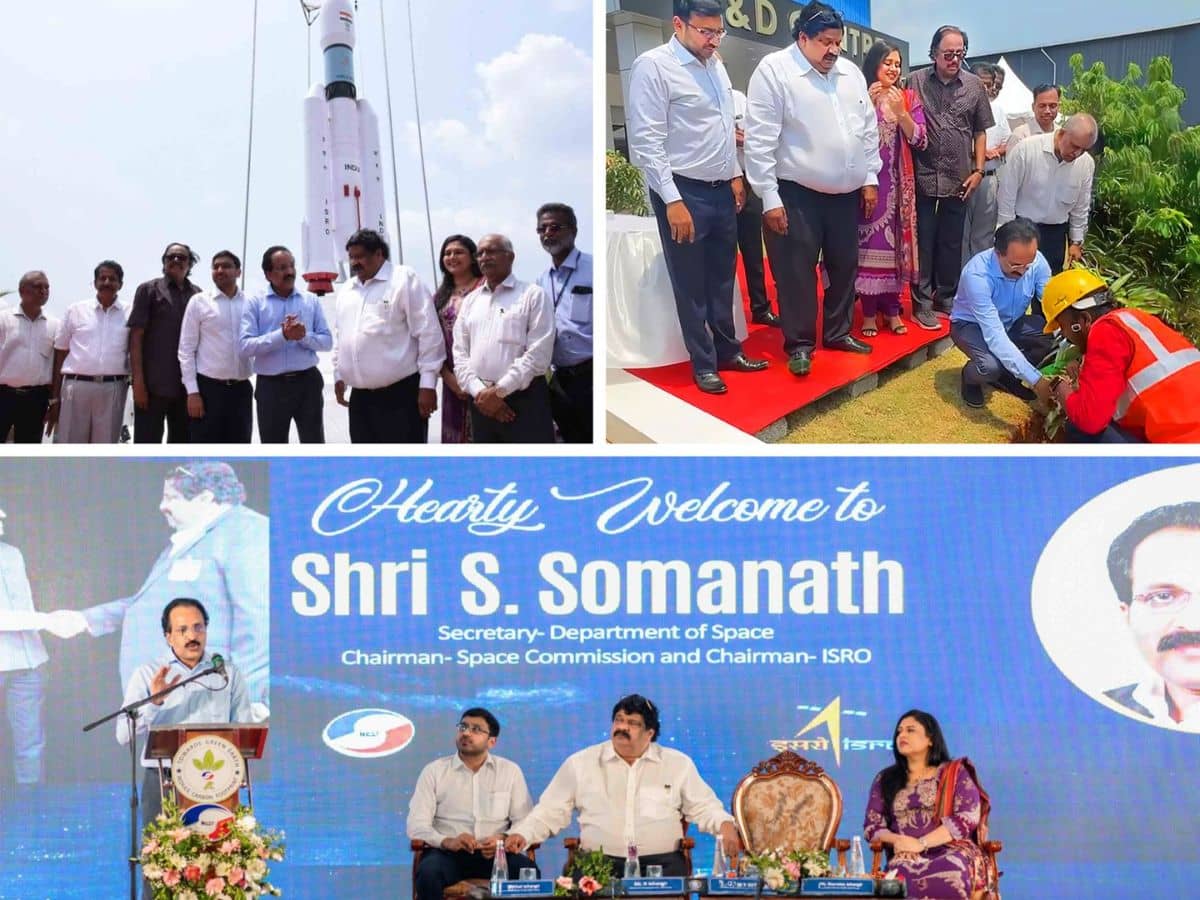
Kochi (Kerala) [India], May 13: Indian Space Research Organization (ISRO) Chairman and Secretary, Department of Space, Government of India, S Somanath unveiled the carbon reduction initiative of SFO Technologies, the flagship company of the NeST Group on Saturday. Besides planting a sapling at the first private SEZ in India, NeST HiTek Park to mark the occasion, he also unveiled a replica of Chandrayaan at the campus highlighting the cooperation of SFO Technologies and ISRO.
The Carbon Reduction initiative of SFO Technologies and the NeST Group follows the United Nations’ objective of achieving a 50 percent reduction by 2035 and zero emissions by 2040.
After unveiling the Zero Emission initiative, Mr. Somanath spoke in detail about the developments in the Indian aerospace and space industry sectors and answered questions from NeST engineers and the management team. The Indian space sector is poised to become a USD 9-10 billion business in the next 5-10 years from the current levels of USD 2 billion, he said. Stressing the importance of private sector companies in this endeavor, Mr. Somanath said 400 enterprises in the country have benefited from the technologies developed by ISRO for its various missions and companies like SFO Technologies are well positioned to take further advantage of the new policy initiatives in the space sector by the government of India.
“The NeST Group of companies have shown a capability to deliver quality services in mission-critical projects”, he added.
NeST Group Chairman and Managing Director, N. Jehangir said, discussions are on with ISRO for various projects including the Gaganyaan project aiming to carry human beings to space for the first time through the Indian Space Mission.
In the welcome address Althaf Jehangir, CEO and Executive Director of NeST Group recalled the close association with ISRO for many years. SFO Technologies, the flagship company of NeST Group, worked in multiple programs such as the RF sub-systems for Chandrayaan and Aditya Missions, manufacturing of Antenna Systems, and Cryogenic Engine Control Systems for launch vehicles. As we advance, the company will be able to gain further assignments from ISRO, he added.
On the importance of the Zero Emission project, Althaf Jehangir said the challenges posed by climate change call for ecologically sustainable practices in the entire value chain of every business. “Being part of Make in India initiatives, catering to the requirements of several Fortune-500 global corporates, we are taking proactive measures to cut emissions in all levels of our operations. We are determined to become a Zero Emission entity by 2040”, he said. He also said, SFO Technologies has signed agreements with multiple partners to create a model for being a socially responsible organization by minimizing carbon pollution.
NeST Group is committed to protecting the environment and reducing carbon emissions, said Ms. Nazneen Jehangir, CEO and Executive Director, NeST Group. She said that international organizations such as the UN, the European Union, and countries like the US have imposed mandatory restrictions on carbon emissions and are currently encouraging companies to reduce emissions.
The three-decade-old NeST group, a diversified conglomerate with investments in Technology, Software, Education, Food and Beverages, has emerged as India’s largest electronics hardware exporter. SFO Technologies is spearheading the electronic hardware vertical with products, services, and processes for some of the leading companies in the world.
The Group provides services ranging from R&D to software engineering and manufacturing including sheet metal fabrication, plastic injection molding, cables, relays, transformers, fiber optics, PCB assemblies, and High-level assemblies for industries such as healthcare, aerospace and defense, space, communications, and transportation, food and beverages, retail, and pharma. The Group has 12,000 employees working from 25 locations worldwide with business offices in almost all major markets and supported by Research and Development and Product fulfillment centers in India, UAE, Japan, and USA, besides front-end offices in UK, China, and Singapore.
If you have any objection to this press release content, kindly contact [email protected] to notify us. We will respond and rectify the situation in the next 24 hours.