



New Delhi (India), February 23: Over the past few years, India has seen major changes in perhaps one of the most unexpected areas; as the Indian education system grows and adapts technology on a greater level, this assimilation is leaving a positive impact in eliminating educational barriers nationwide. For instance, In 2023, India witnessed a surge in female enrollment by 28% in higher education; recent reports indicate that females make up 43% of students enrolled in STEM courses nationally. As this number is expected to rise, the 2024-2025 budget will provide more opportunities for India’s students and private sectors to adopt learning approaches that leverage the nation’s workforce and dispense resources equitably.
On 1st February 2024, India’s Finance Minister Nirmala Sitaraman announced in their budgetary speech that the government will implement a 1 Lakh rupees corpus with an attached 50-year Interest-free loan for long-term financing of research and innovation in domains of technology and science.
Moreover, the 1 lakh rupees corpus carries a little to no interest rate to encourage various private sectors to explore and prioritize research and innovation activities. Beyond the aspect of current defence needs and requirements, this budget also serves as a medium for propelling Indian growth in the future. India has undergone a massive “Brain Drain” over the past few decades due to students facing a lack of opportunities for career prospects and innovative career options. Regardless, this recent Corpus serves as a vital medium for leveraging India’s manpower to generate innovations and developments for our country.
White, the government’s focus on steering India as a digitally-equipped economy has been evident by their distinctive mediums like digital India, Digital public infrastructure and others. These initiatives will augment the nation’s private sector and its capacity to invest and lead innovations. After the announcement of the Corpus, the nation’s finance Minister claimed that “This will encourage finance firms to scale up research and innovation significantly in sunrise domains. We need programs that combine the powers of our youth and technology.”
While there has not been any evidence of the real-time impact of this mandate, leading industrialists have laid claim that these strategic investments will align India with its pursuit of steering towards a future that sees the nation as a leader in innovation.
As we move towards the future, an irrevocable accentuation needs to be placed on altering teaching approaches across the nation. For years, the common ideal around education was the lack of government initiatives that helped institutions radicalize. However, the past decade has changed the spectrum completely. With the government’s 1 lakh corpus and its inverse demand to garner better innovation across the nation, there needs to be a greater focus on experiential learning and experimentation in India’s higher educational institutions.
However, as this commitment is recognized, India’s private education institutions must uphold the obligation of developing an experiential learning approach that harbours and assimilates research, innovation and entrepreneurship. Since private institutions have emerged in India in vast quantities, their potential and talent development are vital for India’s growth and global leadership.
Holding innovation at the pinnacle of their holistic learning pedagogy and integrating technology for propelling augmented student learning, a NAAC ‘A’ grade and UCG 12(B) Status institute IMS Ghaziabad (University Courses Campus) has emerged as a leading institution with more than 3 decades of experience in vital areas of management studies, International business, information technology, bioscience, engineering and media studies.
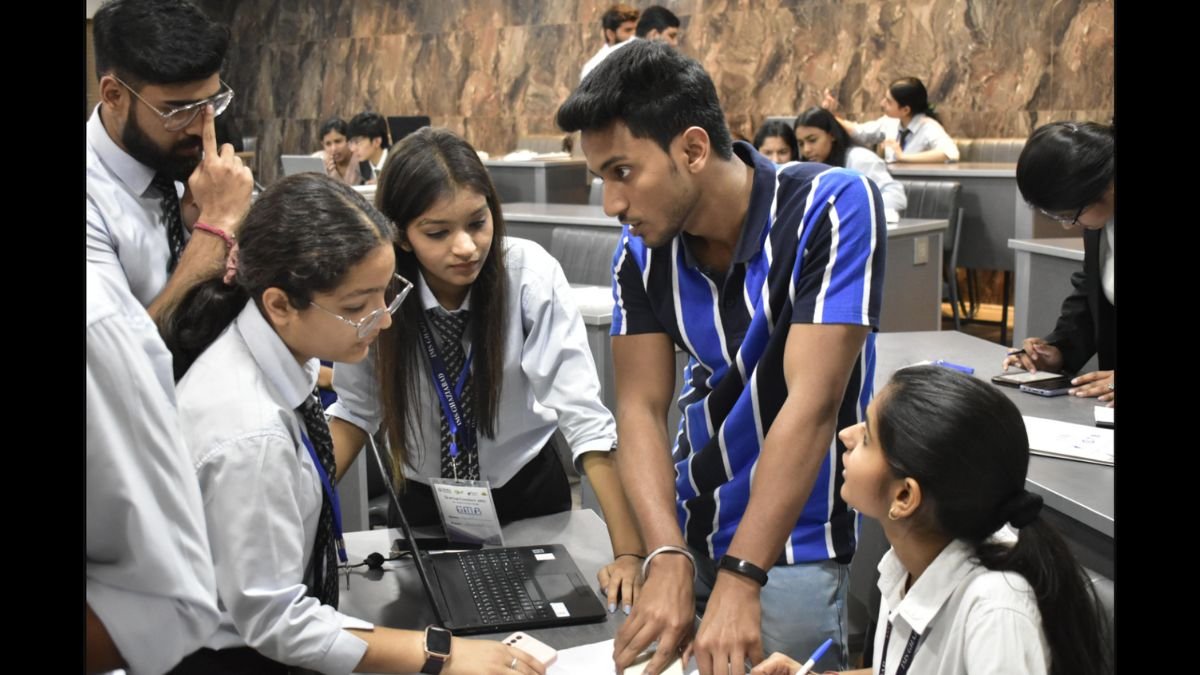
The institute’s learning methodology curates strategic assimilation of real-time project works, industry interface sessions and industry partnership sessions that help them better understand emerging technologies and corporate practices while developing a keen need for peripheral research and implementation. Affiliated to CCS University, Meerut, the courses at the institute follow a student-centric approach focusing on logic building, result-oriented problem solving, augmentation of solutions and personality development.
If you have any objection to this press release content, kindly contact [email protected] to notify us. We will respond and rectify the situation in the next 24 hours.